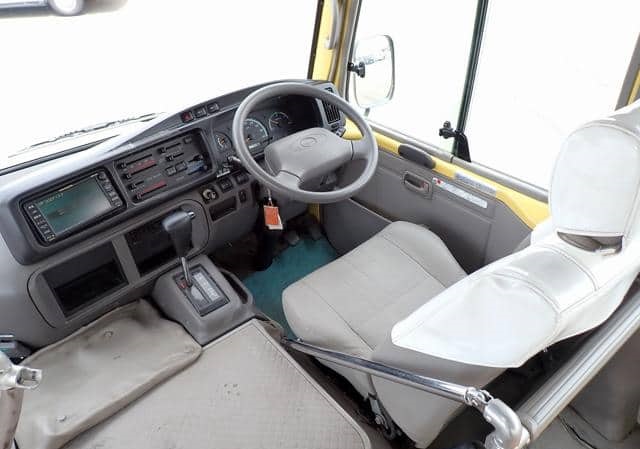
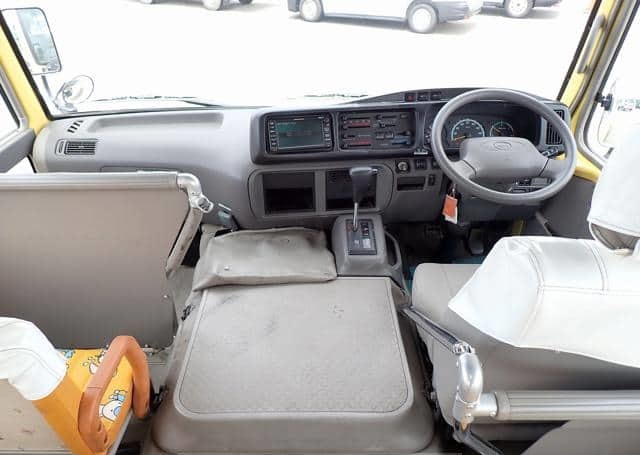
This concise guide outlines what to expect from a 2010 HINO LIESSE II used as a city/highway people‑mover. It focuses on real‑world performance, ride and comfort, economy, and day‑to‑day practicality. Exact specifications, options and equipment vary by market and by engine/transmission choice, so the numbers below should be treated as typical ranges rather than factory exacts. If you want exact factory data, tell me your country or VIN and I can look up the relevant build information.
Note: factory fitment, seating layouts, safety kit and drivetrain options differ by region and year. If you provide your country or VIN, I can give precise figures for that vehicle.
Performance
The Liesse II is designed primarily as a people‑carrier rather than a performance vehicle. Expect modest acceleration and deliberate gearing geared to load-carrying and fuel economy rather than quickness.
Engines: Most examples use small to medium displacement diesel engines (4‑cylinder typical) tuned for torque. Petrol options exist in some markets but are less common for higher‑capacity layouts.
Power and torque: Output is generally adequate for urban start/stop and steady highway cruising, but not sporty — think of steady, dependable pull rather than rapid acceleration.
Speed and overtaking: It will cruise comfortably at legal highway speeds (commonly 80–100 km/h / 50–62 mph). Overtakes require planning; expect leisurely merge and passing performance, especially when fully loaded.
Transmission: Available with manual and automatic transmissions depending on market. Manuals can feel more direct and often return slightly better fuel economy; modern automatics make city driving easier.
Ride and Comfort
The Liesse II prioritises passenger capacity and visibility. Its ride and cabin experience reflect that mission:
Suspension and comfort: Suspension is typically tuned for load-bearing — it can feel firm when empty and settle into a more controlled, comfortable ride when carrying a fuller passenger load. Expect noticeable body motion over uneven surfaces compared with minivans designed for car‑like comfort.
Seating and visibility: Improved seating and large windows give good sightlines for passengers. Seat comfort varies by trim — some are basic vinyl for durability, while higher trims or retrofit options include more cushioned seats and armrests.
Noise and refinement: Diesel drivetrains and simple body construction mean engine and road noise are present, especially at high revs. Many operators add extra insulation or sound treatments if long highway runs are common.
Climate control: Heating and air conditioning options depend on trim. For mixed city/highway use, make sure the HVAC is serviceable and sized for full‑capacity loads in your climate.
Economy
Fuel economy depends heavily on engine choice, load, driving style and whether the vehicle spends most time in inner‑city stop/start traffic or steady highway running.
Typical consumption: As a practical guide, expect fuel consumption in the rough range of 10–16 L/100 km (approximate; heavier duty layouts and congested urban cycles push consumption toward the higher end).
Diesel vs petrol: Diesel variants usually deliver better economy and more low‑end torque for loaded operation. Petrol models tend to be thirstier but may cost less initially in some markets.
Maintenance economics: Routine service intervals and basic mechanicals make maintenance straightforward. Fuel and service bills are the main ongoing costs; look for a unit with documented service history to avoid surprise rebuilds.
Practicality
The Liesse II works well as a practical people‑mover for short‑route shuttles, city runs, school transport and mid‑distance highway trips. Key points:
Seating capacity and layouts: Typically configured for between roughly 15 and 30 passengers depending on local regulations and interior layout. Customised layouts (fewer seats + luggage areas, wheelchair ramps, or luxury conversions) are common.
Access and luggage: Low‑step entry and wide doors make city boarding straightforward. Luggage space varies — external roof racks or rear compartments are used for airport/shuttle roles.
Durability and parts: HINO‘s commercial orientation means the chassis and drivetrain are durable and parts availability is good in regions where Hino/TOYOTA networks operate. In more remote markets, aftermarket support can vary.
Safety: Safety equipment depends on model and market. Some units offer ABS, basic airbags and reinforced bodies; others may be more spartan. Verify the vehicle’s installed safety options if passenger protection is a priority.
Customization: Common add‑ons include additional seating, upgraded seats, PA systems, CCTV, roof air‑conditioning units, wheelchair lifts, and stronger suspension packages for heavy routes.
Ownership Considerations
If you’re looking to buy or operate a 2010 Liesse II, check:
Service history and evidence of regular diesel maintenance (timing belts, injector servicing, turbo care if fitted).
Rust and chassis integrity—inspect underbody and wheel arches, particularly in salty climates.
Condition of brakes and suspension — these wear items are critical for safety in passenger operation.
Compliance with local passenger vehicle regulations and seatbelt/EVAC requirements for your operation.
Final thoughts
The HINO LIESSE II (2010) is a practical, workmanlike people‑mover: reliable, easy to maintain and suitable for mixed city and highway duties when you prioritise durability and passenger capacity over car‑like performance. Expect modest acceleration, firm but competent ride quality, reasonable diesel fuel economy under typical loads, and good adaptability through aftermarket and OEM conversion options. For precise factory data (engine output, curb weight, seating certs and original equipment), tell me your country or VIN and I’ll provide the exact specification for that build.
FAQs
What is the typical seating capacity?
Depending on layout and local regulations, typical seating ranges from roughly 15 up to around 30 passengers. Configurations vary: coach seating, commuter benches, or mixed luggage/seat layouts.
What fuel economy should I expect?
Expect roughly 10–16 L/100 km in normal city/highway mixed use. Heavily loaded city routes will be toward the higher end of this range.
Is it expensive to maintain?
Maintenance is generally straightforward and comparable to other light commercial minibuses. Diesel engines are durable if serviced on schedule; major costs appear with neglected service or high‑mileage engine/transmission work.
Can it handle highway runs?
Yes — the Liesse II is capable of sustained highway cruising at legal speeds. For long high-speed runs, ensure engine cooling, HVAC and seats are in good condition; noise and comfort are more basic than in larger coaches.
Are wheelchair and accessibility options available?
Many markets offer retrofit options such as wheelchair ramps, lifts and low‑step conversions. Availability will depend on the vehicle’s configuration and local converters.
How do I get exact factory specs for my vehicle?
Provide your country or the vehicle’s VIN and I can pull up the specific factory build data (engine, transmission, body code and original equipment) for that unit.
This concise guide summarizes what owners commonly like, commonly complain about, and practical, real‑world tips for buying, owning, and maintaining a HINO LIESSE II minibus from around 2010. What Owners...
The HINO LIESSE II LXHR 2019 is a modern coach engineered to offer comfort and efficiency for long-distance travel. In the context of Uganda’s diverse terrain, from well-maintained highways to...
The 2010 HINO LIESSE GX is a compact, versatile minibus platform used for school runs, shuttle services, tourism and light commercial passenger tasks. Whether you’re buying a used example, specifying...
The HINO LIESSE II 2016 model is engineered for durability and comfort, making it a potential choice for long-distance travel in Uganda’s diverse landscapes. Its robust build and reliable performance...
Family owned dealership of new and pre-owned vehicles with several locations across the Uganda. Lowest prices and the best customer service guaranteed.
You're almost there, select at least one more to compare!
We use cookies to ensure that we give you the best experience on our website. If you continue to use this site we will assume that you are happy with it.
You can revoke your consent any time using the Revoke consent button.