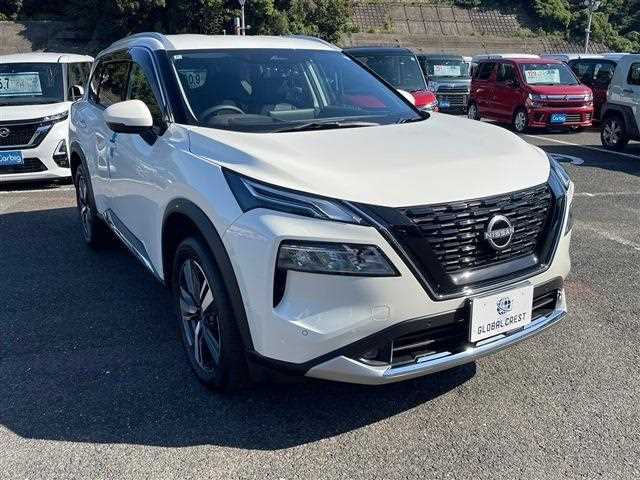
Acceleration is a fundamental concept in physics that describes the rate of change of velocity of an object with respect to time.
It is a vector quantity, which means it has both magnitude and direction. Understanding acceleration is crucial for analyzing the motion of objects, whether they are in motion due to external forces (like gravity or friction) or as a result of their own inherent properties.
What is Acceleration?
Acceleration can be defined mathematically as:
<a target="_blank" = (v_f - v_i) / t
Where:
a = acceleration (m/s²)
v_f = final velocity (m/s)
v_i = initial velocity (m/s)
t = time interval (s)
This formula indicates that acceleration is the change in velocity (final minus initial) divided by the time over which that change occurs.
Types of Acceleration
There are two main types of acceleration:
Uniform Acceleration: This occurs when the rate of acceleration remains constant over time, such as when a car speeds up at a consistent rate.
Non-uniform Acceleration: This occurs when the rate of acceleration changes, such as when a roller coaster moves faster at different points of the track.
Acceleration in Different Contexts
1. Linear Acceleration
Linear acceleration refers to the change in velocity in a straight line. A classic example of linear acceleration is a car accelerating from a stoplight. A typical calculation would involve measuring the initial and final speeds of the vehicle and the time it took to accelerate.
2. Angular Acceleration
Angular acceleration is the rate of change of angular velocity. This is crucial in scenarios involving rotational movement, such as the spinning of a wheel or the rotation of a planet. Like linear acceleration, angular acceleration can also be defined as:
<a target="_blank" = (ω_f - ω_i) / t
Where:
ω_f = final angular velocity (rad/s)
ω_i = initial angular velocity (rad/s)
t = time interval (s)
Factors Affecting Acceleration
Several factors can influence acceleration, including:
Mass of the Object: According to Newton’s second law, acceleration is inversely proportional to mass. A larger mass results in less acceleration for the same amount of force applied.
Net Force: The greater the net force applied to an object, the greater its acceleration. The relationship can be represented as:
Friction: Frictional forces can slow down an object, decreasing its acceleration. Surfaces or materials with high friction coefficients will generate more resistance to motion.
Real-world Applications of Acceleration
Understanding acceleration is vital in various fields:
Aerospace Engineering: Calculating the velocity of rockets during launch and their acceleration is crucial for planning missions.
Automobile Safety: Car manufacturers use data on acceleration to design safer vehicles, ensuring crumple zones can absorb impact forces.
Sports Science: Coaches analyze athletes’ acceleration patterns to improve performance in sports where speed is critical.
Final thoughts
In summary, acceleration is a fundamental concept that plays a vital role in various fields. Whether examining linear or angular acceleration, understanding the factors affecting it is crucial in making informed analyses and decisions. It significantly influences our daily lives, from driving our cars to understanding how celestial bodies move in the universe. By grasping the principles of acceleration, individuals can apply this knowledge practically, enhancing safety, performance, and efficiency in numerous activities.
FAQs
Q: What is the unit of acceleration?
A: The unit of acceleration is meters per second squared (m/s²). This indicates how many meters per second an object’s speed increases every second.
Q: Can acceleration be negative?
A: Yes, negative acceleration is often referred to as deceleration. This occurs when an object slows down.
Q: How is acceleration different from velocity?
A: Velocity refers to the speed of an object in a given direction, whereas acceleration describes how that velocity changes over time.
Q: Is acceleration constant in free fall?
A: Yes, in a vacuum, the acceleration due to gravity is constant at approximately 9.81 m/s². However, air resistance may affect the rate of fall for objects in our atmosphere.
Q: How does friction affect acceleration?
A: Friction opposes motion, so greater friction reduces acceleration. If a force is applied to an object in a high-friction environment, it will experience less acceleration than if it were on a low-friction surface.
Purchasing a used vehicle can be a daunting task, particularly with the myriad of risks involved. To mitigate these risks, potential buyers often turn to Vehicle History Reports (VHRs). A...
The NISSAN X-TRAIL is a mid-size crossover SUV that has gained popularity around the world for its versatility and performance. With various engine options tailored to different driving preferences, the...
In an increasingly digital age, it may seem that paperwork is becoming a relic of the past. However, paperwork remains a crucial component in various sectors, serving as a fundamental...
The 2018 Nissan X-Trail Hybrid has garnered attention in various markets for its eco-friendly features and fuel efficiency, particularly in urban settings. In Uganda, where city traffic often leads to...
Family owned dealership of new and pre-owned vehicles with several locations across the Uganda. Lowest prices and the best customer service guaranteed.
You're almost there, select at least one more to compare!
We use cookies to ensure that we give you the best experience on our website. If you continue to use this site we will assume that you are happy with it.
You can revoke your consent any time using the Revoke consent button.