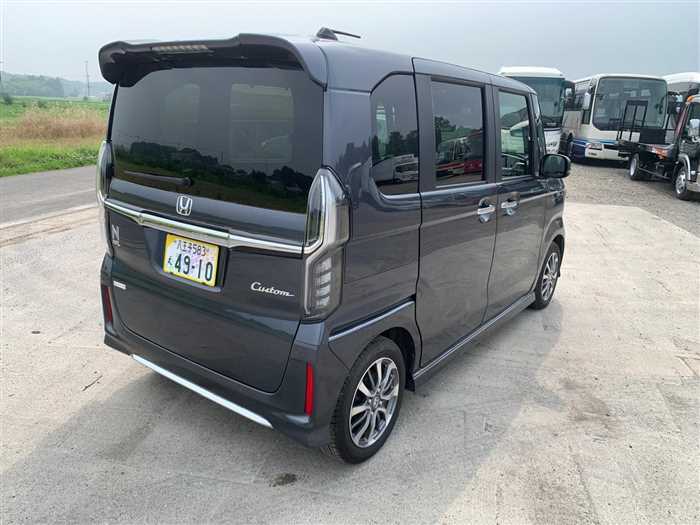
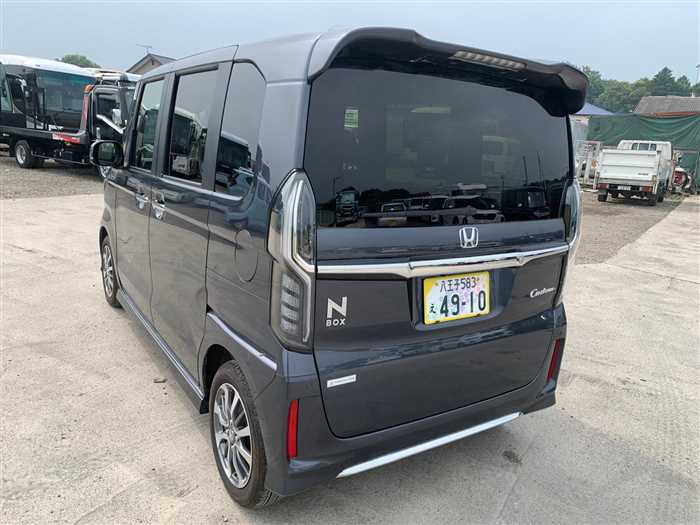
This short guide gives approximate service intervals, common owner‑reported issues, signs to watch for, and simple checks you can do yourself. Always confirm exact intervals, fluid types, and part specifications from your vehicle’s owner’s manual or aHONDA dealer — recommendations can vary by engine/trim and region.
Recommended Service Intervals (Approximate)
Below are general, approximate intervals frequently used for small modern petrol kei cars like the N‑BOX. These are only guidelines — follow the schedule in your owner’s manual or the dealer service plan for your region.
Engine oil & filter: every 5,000–10,000 km (3,000–6,000 miles) or 6–12 months. Change interval depends on oil type (conventional vs synthetic) and driving conditions (city vs highway).
Brake inspection: visual check every 5,000–10,000 km and pad replacement commonly at 30,000–60,000 km depending on use.
Tire rotation & inspection: every 5,000–10,000 km; replace tires when tread is below legal/safe depth or uneven wear appears.
Air filter: inspect at 15,000 km; replace around 30,000 km or sooner in dusty areas.
Battery: check annually; replace typically every 3–5 years depending on climate and usage.
Coolant: inspect level regularly; change interval commonly every 3–4 years (or as specified by Honda).
Brake fluid: flush/replacement recommended every 2 years in many markets.
Transmission (CVT) service: intervals vary widely — many manufacturers recommend CVT fluid change between 60,000–100,000 km, but check Honda guidance for your model.
Spark plugs: inspect/replace typically between 60,000–100,000 km depending on plug type (iridium lasts longer).
Major inspections: service at 30,000 km and 60,000 km for more thorough checks (suspension, steering, fuel system, emissions).
Note: the N‑BOX may be fitted with different engine options or equipment levels. Always use the service intervals and part numbers printed in your specific manual.
Common Issues Owners Report
Owner forums and service bulletins for kei cars like the N‑BOX often mention a few recurring, generally minor issues. Knowing them helps you spot problems early.
CVT shudder or hesitation: some owners report low‑speed shudder or roughness. Regular CVT fluid checks and following Honda’s service schedule helps reduce risk.
Idle roughness or small misfires: can be caused by fouled spark plugs, dirty fuel injectors, or vacuum leaks — a simple tune‑up usually resolves this.
Air conditioning performance drop: in hot climates AC efficiency may decline; a refrigerant top‑up or cabin filter replacement can help.
Interior rattles and trim squeaks: common in compact cars; inspect fasteners and door seals if noise becomes noticeable.
Tire wear/alignment issues: because of the short wheelbase and city driving, uneven wear can appear if alignment or rotation is neglected.
Battery drain from accessories: keyless entry and electronics can reduce battery life if the car sits unused for long periods.
Signs to Watch For
Early detection prevents small issues from becoming expensive repairs. Pay attention to these warning signs:
Brake fluid level: inspect the reservoir; dark or low fluid suggests it’s time for a service.
Battery visual check: look for corrosion on terminals and ensure hold‑down is secure. If the car struggles to start, have the battery and charging system tested.
Wipers & washers: replace blades yearly or as soon as streaking appears; keep washer bottle filled.
Underbody look‑over: glance under the car for obvious leaks or loose components.
Listen & feel: drive at typical speeds and note unusual noises, vibrations, or changes in handling — report them promptly.
A basic toolkit (tire gauge, funnel, gloves, flashlight) and a copy of the owner’s manual make these checks easier and safer.
When to Seek Professional Help
If you notice serious symptoms such as persistent warning lights, fluid leaks, smoke, loss of power, or braking problems, stop driving and have the vehicle inspected by a qualified technician. For CVT concerns or drivability complaints, use an authorized Honda service center if possible — CVT systems are sensitive to incorrect fluids and procedures.
Final thoughts
Owning a 2023 Honda N‑BOX can be economical and enjoyable when you follow a simple maintenance routine: regular oil changes, timely inspections, attention to tires and brakes, and quick response to warning signs. Many small problems are preventable with basic checks and adherence to the service schedule. Always verify exact intervals, fluids, and part numbers from your owner’s manual or a Honda dealer — that ensures warranty compliance and optimal long‑term reliability.
FAQs
Q: How often should I change the engine oil?
A: Follow the owner’s manual. As a general guide, many owners change oil every 5,000–10,000 km (3,000–6,000 miles) depending on oil type and driving style. Synthetic oils often allow longer intervals.
Q: Does the N‑BOX use a timing belt or chain?
A: Engine designs vary by model/year and region. Check your owner’s manual or with a Honda dealer to confirm whether your engine uses a belt or chain and the recommended inspection interval.
Q: How often should CVT fluid be serviced?
A: CVT service intervals differ between markets. Some recommend a fluid change around 60,000–100,000 km; others use longer intervals. Always use Honda‑approved CVT fluid and follow Honda’s schedule.
Q: What oil grade should I use?
A: Use the oil viscosity and specification listed in your owner’s manual. Many modern Hondas recommend low‑viscosity oils such as 0W‑20 for fuel economy, but confirm for your specific model.
Q: My N‑BOX vibrates at low speed — what could it be?
A: Low‑speed shudder can stem from CVT issues, tire balance, or engine/transmission mounts. Have a technician diagnose it; early attention prevents further damage.
Q: Can I perform maintenance myself?
A: Yes — many basic checks (oil level, tire pressure, lights, fluid levels) are easy to do. For complex jobs (CVT service, transmission work, major diagnostics), use a qualified technician to avoid damage and preserve warranty.
Below is a focused, practical checklist you can use when inspecting or trying a 2017 HONDA N‑BOX at a dealer. Use it at the dealership, or when negotiating with a...
The 2025 Honda N Box has garnered attention for its compact size and urban-friendly design, making it a popular choice for city driving in Uganda. Known for its fuel efficiency,...
Family owned dealership of new and pre-owned vehicles with several locations across the Uganda. Lowest prices and the best customer service guaranteed.
You're almost there, select at least one more to compare!
We use cookies to ensure that we give you the best experience on our website. If you continue to use this site we will assume that you are happy with it.
You can revoke your consent any time using the Revoke consent button.