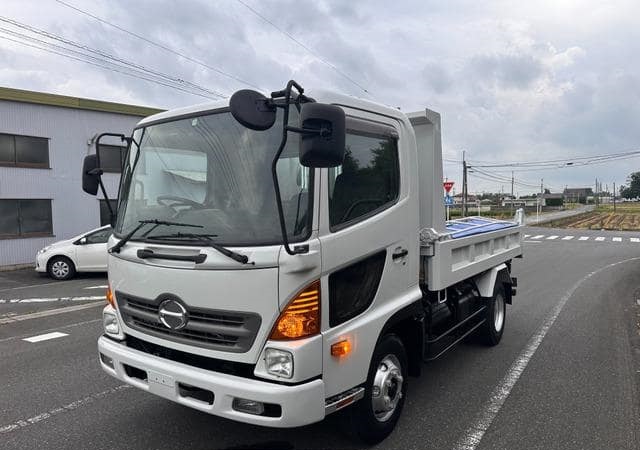
The 2011 HINO RANGER (medium-duty HINO commercial truck series) is a workhorse designed for commercial use across light- and medium-duty tasks. This summary gives a concise, practical look at how the Ranger typically performs in city and highway use, with notes on ride quality, fuel economy and overall day-to-day practicality. If you have a specific Ranger variant (tonnage, engine or cab type), tell me and I can refine the remarks.
How it behaves in city use
In urban environments, the Ranger’s performance is shaped by its chassis configuration and intended payload. It is generally engineered for durability and load-carrying rather than car-like agility:
Maneuverability: Short-wheelbase and lighter tonnage versions can be surprisingly nimble for a commercial vehicle, with reasonable turning circles for tight streets and loading zones. Longer-wheelbase or higher-GVW models require more planning for tight corners and narrow streets.
Acceleration & drivability: The diesel engines are tuned for torque rather than brisk acceleration. From a standstill in stop‑start traffic you’ll notice modest throttle response; these trucks are happiest when carrying a load that keeps them in their torque band.
Transmission: Many Rangers use manual or automated manual gearboxes. Manuals give better control in city traffic but require more driver work; automated boxes reduce fatigue and are preferable for heavy stop‑start duty.
Visibility & ergonomics: Cab design prioritizes visibility and practical controls for drivers—good outward vision, high seating position and straightforward instrument layout are common, which helps in dense urban traffic and when maneuvering around pedestrians and loading areas.
Braking & safety: Braking systems are robust, built for repeated stops with heavy loads. Expect solid, predictable braking feel, though performance will depend on condition and whether the truck is loaded.
How it behaves on the highway
On highways the Ranger typically showcases the strengths of a medium‑duty commercial truck: stability, load-hauling capability and endurance over long distances.
Cruise stability: When loaded, the chassis rides more stably and feels planted at sustained speeds. Crosswinds affect taller body styles (box bodies, refrigerated units) more than flatbeds or low-profile configurations.
Engine & gearing: Engines and gear ratios are selected to provide steady cruise at legal highway speeds while keeping engine rpm reasonable under load. Acceleration for overtaking is adequate but not rapid—plan overtakes with the vehicle’s load in mind.
Long-distance comfort: Cab comfort is sufficient for day runs; sleeper cab variants exist for multi-day trips. Driver fatigue is mitigated by ergonomic seating and straightforward controls, though noise and vibration are higher than in passenger vehicles.
Reliability on long hauls: Hino’s medium-duty models have a reputation for ruggedness. On highways they typically deliver consistent performance when properly maintained, with fewer surprises than older or poorly maintained competitors.
Ride quality
Ride quality for the 2011 Ranger depends heavily on suspension setup, load and body type:
Suspension: Most Rangers use leaf springs with shock absorbers—a durable setup that tolerates heavy loads but feels firm when unloaded. Air-suspension options may be available on specific higher-end or specialist models and greatly improve comfort.
Loaded vs unloaded: The truck usually rides best when carrying its intended payload; an empty chassis can feel harsh and bouncy over pitted roads. Properly matched suspension and load distribution noticeably improve ride stability and comfort.
Noise and vibration: Expect moderate engine noise, wind and road noise at highway speeds. Cab insulation is reasonable for the class but not as refined as passenger trucks or vans.
Fuel economy (practical perspective)
Fuel economy varies widely by engine, gearing, load, bodywork and driver habits. Rather than fixed numbers, consider these practical points:
City vs highway: Stop‑start city driving with frequent idling and low-speed running increases fuel consumption compared with steady highway cruising. The Ranger is more economical when kept in its optimal rpm range and carrying a load.
Payload matters: A properly loaded truck can deliver better economy per tonne-km than an empty vehicle because the engine operates closer to its designed torque band.
Driver technique & maintenance: Smooth shifting, avoiding excessive idling, correct tire pressures and regular servicing (air filters, injectors, timing adjustments where applicable) make a significant difference in real-world economy.
Overall practicality
The 2011 Hino Ranger is a practical, no-nonsense commercial vehicle that is well-suited to businesses that need a robust platform for deliveries, construction support, refrigerated transport or other vocational applications:
Versatility: Chassis configurations support a wide variety of bodies: flatbeds, box bodies, tippers, tankers and refrigerated units. This versatility is one of the Ranger’s biggest strengths.
Durability & serviceability: Components are designed for commercial duty—easy-to-service layouts, widely available parts in many markets and a network of dealers make maintenance straightforward compared with rarer brands.
Cost of ownership: Total cost depends on duty cycle. Initial purchase and running costs are competitive for the class; long-term costs depend on maintenance discipline and how heavily the vehicle is used.
Resale & reliability: A well-maintained Ranger typically retains practical resale value thanks to Hino’s reputation for reliability in the medium-duty segment.
Factors that change the picture
Exact performance varies by variant—engine size (4‑ vs 6‑cylinder), gearbox type, GVW/tonnage, cab choice (day cab vs sleeper) and bodywork. Lighter, shorter-chassis versions are better in tight urban work; heavier, long-wheelbase Rangers suit regional and highway hauling.
Final thoughts
The 2011 Hino Ranger is a practical medium-duty truck that delivers dependable city and highway performance when matched to the right role. It is more at home carrying payloads than idling empty—expect better ride, economy and handling under load. City driving requires patience due to modest acceleration and a firm unloaded ride, while highway driving rewards with stable cruising, predictable handling and strong durability. If you tell me the specific Ranger variant (tonnage, engine code, cab type or gearbox), I can give tailored remarks on expected fuel figures, ride characteristics and recommended use cases.
FAQs
Q: Is the 2011 Hino Ranger good for mixed city and highway work?
A: Yes—provided you choose the right variant. Shorter-wheelbase, lower-GVW versions are easier in urban work; heavier variants and higher-geared options are better for sustained highway loads.
Q: Will the ride be comfortable for a lone driver doing local deliveries?
A: Comfort is adequate for the class. Expect a firm ride when the truck is empty. For frequent urban stops, an automated transmission reduces fatigue. Consider air-suspension or a lighter-spec chassis if comfort is a priority.
Q: How is fuel economy in real terms?
A: Economy depends on load, gearing and driving style. The Ranger is relatively efficient on sustained highway runs with correct gearing and a full payload; city stop-start driving increases consumption. Regular maintenance improves economy noticeably.
Q: What are common maintenance considerations?
A: Regular diesel maintenance—timely oil and filter changes, fuel-filter replacement, injector servicing, cooling system checks and keeping tires and brakes in good order—keeps the Ranger reliable. Address any gearbox or clutch wear early if used in heavy stop‑start duty.
Q: Should I choose automatic, AMT or manual?
A: For heavy urban work with frequent shifting, an automated transmission (AMT) reduces driver fatigue and can improve efficiency. Manuals are durable and preferred by some fleets for rugged simplicity; automatics are easier for mixed drivers and stop‑start routes.
Tell me your Ranger’s exact variant (GVW/tonnage, engine or cab) and I’ll refine these points with more specific expectations and numbers.
The HINO RANGER 2021 has garnered attention in Uganda’s transportation sector, particularly for heavy-duty applications. Known for its robust construction, advanced engineering, and fuel efficiency, this vehicle is designed to...
The HINO RANGER 8 2016 model has garnered attention in Uganda’s transport sector for its reliability and performance in long-distance hauling. Engineered with a robust design, this truck boasts a...
As an experienced car inspector in Uganda, I often encounter various vehicles that cater to different needs, and the HINO RANGER 2014 is no exception. For city commuters, reliability and...
As an experienced car inspector in Uganda, I often encounter prospective buyers grappling with the suitability of various vehicles for the unique driving conditions our country presents. The HINO RANGER...
Family owned dealership of new and pre-owned vehicles with several locations across the Uganda. Lowest prices and the best customer service guaranteed.
You're almost there, select at least one more to compare!
We use cookies to ensure that we give you the best experience on our website. If you continue to use this site we will assume that you are happy with it.
You can revoke your consent any time using the Revoke consent button.