



Description
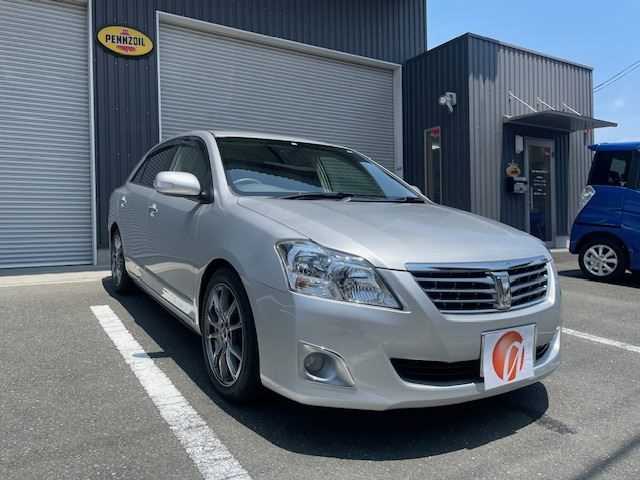
Toyota Premio 2010 for Sale in Uganda
The Toyota Premio 2010 remains a smart sedan for Ugandan buyers who want comfort, clean executive styling, and dependable Toyota ownership in one package. Uganda-facing marketplaces still show active 2010 Premio stock, and current listings commonly feature automatic 1.8-litre cars in Kampala and Nakawa. That tells you the model still has real market relevance for buyers shopping today.
A Sedan…
Toyota Premio 2010 for Sale in Uganda
The Toyota Premio 2010 remains a smart sedan for Ugandan buyers who want comfort, clean executive styling, and dependable Toyota ownership in one package. Uganda-facing marketplaces still show active 2010 Premio stock, and current listings commonly feature automatic 1.8-litre cars in Kampala and Nakawa. That tells you the model still has real market relevance for buyers shopping today.
A Sedan That Looks Executive Without Looking Loud
One of the biggest strengths of the Toyota Premio 2010 is its design. The body looks neat, low, and mature. It does not depend on sharp styling to feel premium. The 2010 Premio range sits around 4.595 metres long and 1.695 metres wide, which gives it a polished road presence while keeping it easy to use in city traffic and normal parking spaces.
Comfort That Makes Daily Driving Easier
The cabin is one of the Premio’s biggest selling points. The 2010 1.8X Prime Selection specification lists interior dimensions of 2055 x 1450 x 1205 mm, a 2700 mm wheelbase, and a five-seat layout. That explains why the Premio feels roomy and comfortable for its class. It suits office travel, family errands, school runs, and longer highway drives without making the cabin feel cramped or tiring.
Engine Choices That Let Buyers Pick What Fits
The Toyota Premio 2010 gives buyers useful engine choice. The model line includes a 1.5F Prime Selection with the NZT260 code and a 1496 cc engine, plus a 1.8X Prime Selection with the ZRT260 code and a 1797 cc engine. Both use CVT and a four-door sedan layout. In practical terms, the 1.5-litre version suits buyers who want lighter everyday running, while the 1.8-litre version suits drivers who want stronger pull and a more relaxed feel with passengers or luggage.
Smooth Automatic Driving That Suits Uganda
One reason the Premio keeps its appeal is how easy it feels in daily use. The mainstream 2010 Premio range uses CVT, and current Uganda-facing listings continue to show automatic transmission as the normal setup. That matters in Uganda because many buyers want one car that can cover workdays, family movement, and town driving without feeling stressful in traffic or awkward in tighter spaces. The Premio answers that need very well.
Fuel Economy That Still Makes Sense
Fuel economy is another strong pillar of the Toyota Premio 2010. The 1.8X Prime Selection specification lists 18.6 km/L and a 60-litre fuel tank. The 1.5F Prime Selection is also positioned as an economy-minded option within the same body style and transmission layout. For buyers who want a car that looks executive but still behaves sensibly at the fuel station, the Premio makes a strong case.


Ride Quality Built Around Calm Comfort
The Premio is tuned for comfort rather than aggression, and that is exactly why many buyers still prefer it. The 1.8X Prime Selection specification lists power-assisted rack-and-pinion steering, MacPherson strut front suspension, torsion beam rear suspension, ventilated front discs, rear drums, and a 5.3-metre turning radius. That hardware points to stable daily road manners, calm cruising, and a comfortable ride for normal family and executive use.
Features That Add Everyday Value
The Premio is not only about a calm ride and a polished shape. It also gives buyers useful daily equipment. Current Uganda listings for 2010 units mention features buyers still care about, including A/C, sound systems, clean interiors, and automatic driving ease on 1.8-litre examples. In the wider used market, the Premio’s five-seat sedan layout, CVT, and practical body size keep it appealing as an everyday executive car rather than a bare transport option.
The Core Pillars Buyers Notice
The core pillars of the Toyota Premio 2010 are easy to define. First, it has a clean executive design that still looks current. Second, it offers a comfortable five-seat cabin with useful interior room. Third, it gives buyers real choice through the 1.5-litre and 1.8-litre versions. Fourth, it balances comfort with sensible fuel use. Fifth, it keeps automatic driving ease and practical size that suit Uganda very well. Sixth, active Uganda-facing listings show that the model still attracts real demand. These points are why the Premio 2010 still makes sense for buyers who want a polished sedan that stays easy to live with.
Why The Toyota Premio 2010 Fits Uganda So Well
Ugandan buyers often want one vehicle that can handle professional use, personal driving, and family movement without compromise. The Toyota Premio 2010 fits that role very well. It gives more polish than many basic compacts, more ease of use than a larger executive sedan, and more ownership reassurance than many alternatives in the same age range. It feels mature without becoming boring, and practical without looking plain. Contact Car Dealer Uganda today and choose a Toyota Premio 2010 that matches your taste, driving style, and daily lifestyle.
FAQs
-
Is the Toyota Premio 2010 a good car for Uganda?
Yes. It combines executive comfort, practical size, automatic driving ease, and Toyota dependability in one refined sedan. -
What engine options can I find on a Toyota Premio 2010?
Common 2010 versions use either the 1.5-litre 1496 cc engine or the 1.8-litre 1797 cc engine. -
How many people can the Toyota Premio 2010 carry?
The 2010 Premio appears as a five-seat sedan with four doors. -
Is the Toyota Premio 2010 automatic?
Yes. The mainstream 2010 Premio range uses CVT, and Uganda-facing listings also show automatic transmission. -
Is the Toyota Premio 2010 fuel efficient?
Yes. The 1.8X Prime Selection specification lists 18.6 km/L, which is strong for a comfort-focused petrol sedan. -
Does the Toyota Premio 2010 come with 4WD?
The common 2010 1.5F and 1.8X Prime Selection entries shown in the cited model references are FF, front-wheel-drive. -
Can I still find a Toyota Premio 2010 for sale in Uganda?
Yes. Uganda-facing dealer and marketplace listings continue to show active 2010 Premio stock, especially 1.8 automatic examples.


