

Description
SINOTRUK HOWO TX 8X4 Dump Truck 2025 – Power, Capacity and Reliability in Uganda
SEO Title: SINOTRUK HOWO TX 8X4 Dump Truck 2025 for Sale in Uganda
Focus Keyword: SINOTRUK HOWO TX 8X4 Dump Truck 2025
Meta Description: Discover the SINOTRUK HOWO TX 8X4 Dump Truck 2025 on Car Dealer Uganda. Explore its 371 HP engine, heavy-duty chassis, impressive load capacity, driver comfort, and construction performance.
SINOTRUK HOWO TX 8X4 Dump Truck 2025: Heavy-Duty…
SINOTRUK HOWO TX 8X4 Dump Truck 2025 – Power, Capacity and Reliability in Uganda
SEO Title: SINOTRUK HOWO TX 8X4 Dump Truck 2025 for Sale in Uganda
Focus Keyword: SINOTRUK HOWO TX 8X4 Dump Truck 2025
Meta Description: Discover the SINOTRUK HOWO TX 8X4 Dump Truck 2025 on Car Dealer Uganda. Explore its 371 HP engine, heavy-duty chassis, impressive load capacity, driver comfort, and construction performance.
SINOTRUK HOWO TX 8X4 Dump Truck 2025: Heavy-Duty Performance for Ambitious Businesses
The SINOTRUK HOWO TX 8X4 Dump Truck 2025 brings serious hauling capability to Uganda’s construction, quarrying, mining, and infrastructure industries. This powerful commercial truck combines a robust chassis, a proven diesel powertrain, and a practical tipping system. It helps businesses move construction materials efficiently across demanding working environments.
Whether you transport sand, gravel, crushed stone, murram, or construction aggregates, this truck offers a compelling commercial vehicle solution. Its four-axle configuration supports heavy-duty operations and helps distribute loads across the chassis. The HOWO TX design also combines a commanding road presence with practical features for professional drivers.
For contractors, transport operators, construction companies, and fleet owners, equipment selection directly affects productivity. The right dump truck can support timely deliveries, improve fleet utilization, and strengthen daily operations. The SINOTRUK HOWO TX 8X4 offers a strong foundation for businesses pursuing these goals.
Car Dealer Uganda presents this 2025 model to buyers seeking a capable heavy commercial vehicle. Explore its performance, carrying capacity, cabin comfort, operating economy, and potential business applications.
SINOTRUK HOWO TX 8X4 Dump Truck 2025 Specifications
Understanding the specifications helps you assess whether this truck suits your transport requirements. The figures below describe a commonly advertised HOWO TX 8X4 configuration. Exact specifications can vary according to the chassis code, engine option, dump body, and market configuration.
| Specification | Advertised configuration |
|---|---|
| Vehicle | SINOTRUK HOWO TX 8X4 Dump Truck |
| Model year | 2025 |
| Drive configuration | 8×4 |
| Engine | WD615.47 diesel |
| Horsepower | 371 HP |
| Engine displacement | Approximately 9.726 litres |
| Engine configuration | Six-cylinder, turbocharged and intercooled |
| Transmission | HW19710 manual gearbox |
| Forward gears | 10 |
| Reverse gears | 2 |
| Front axle rating | Commonly 9,500 kg per axle |
| Rear axle rating | Commonly 16,000 kg per axle |
| Common advertised body volume | Approximately 18–28 cubic metres, depending on configuration |
| Example advertised tare weight | Approximately 17,000 kg |
| Example advertised gross vehicle weight | Up to 60,000 kg in certain configurations |
| Maximum load | Configuration-dependent; confirm the approved payload |
| Cabin | TX-F cab, with sleeper on certain versions |
| Comfort features | Air conditioning and adjustable driver’s seat on advertised configurations |
| Typical applications | Construction, quarrying, mining, and bulk-material transport |
Important weight clarification: A truck’s tare weight, gross vehicle weight, axle ratings, and payload represent different measurements. One published configuration lists a 17,000 kg curb weight and 60,000 kg total weight. Their arithmetic difference is 43,000 kg, but that difference does not automatically establish a legal payload. The registered vehicle limits, body weight, axle limits, and applicable Ugandan regulations determine the permitted load.
Before purchasing, ask Car Dealer Uganda to verify the exact truck’s chassis number, engine specification, body dimensions, tare weight, gross vehicle weight, and approved payload.
SINOTRUK HOWO TX 8X4 Dump Truck 2025 Horsepower and Engine Performance
371 HP Diesel Power for Demanding Transport Work
The commonly advertised WD615.47 engine delivers approximately 371 horsepower. This six-cylinder diesel engine uses turbocharging and intercooling to support strong performance under demanding operating conditions.
That power helps the truck move substantial loads across construction sites and established transport routes. It also supports demanding duties involving quarry materials, aggregates, and earthmoving projects. The engine’s performance makes this configuration suitable for operators who prioritize productive heavy-duty hauling.
Horsepower alone does not determine a truck’s working ability. Torque, gearbox ratios, axle ratios, tire selection, road gradients, and load distribution also influence performance. Buyers should assess these factors against their actual routes and working conditions.
Turbocharged Diesel Performance for Commercial Operations
The turbocharged engine helps the truck deliver useful power across a demanding working cycle. Intercooling supports the engine’s air-management system during operation. Together, these technologies help the powertrain meet the needs of heavy commercial transport.
For Ugandan operators, route selection matters considerably. Construction trucks may travel between quarries, material yards, project sites, and urban developments. Some routes include steep gradients, rough surfaces, congestion, and frequent stops.
Choose the final engine and drivetrain configuration according to your intended workload. A truck carrying dense stone requires a different operating assessment from one transporting lighter bulk materials. A professional inspection can help establish the right specification.
SINOTRUK HOWO TX 8X4 Dump Truck 2025 Transmission
The commonly listed HW19710 transmission provides ten forward gears and two reverse gears. Its range of ratios helps drivers select suitable gears for different operating conditions.
Lower gears support controlled movement when the truck starts under load or tackles challenging gradients. Higher gears support progress on suitable roads when traffic, terrain, and load conditions allow.
The transmission also works with the engine and axles to determine overall operating performance. Drivers should follow the manufacturer’s operating guidance and avoid excessive engine strain. Proper gear selection can support mechanical longevity and smoother daily operations.
SINOTRUK HOWO TX 8X4 Dump Truck 2025 Weight and Maximum Load
Understanding Maximum Load Capacity
Carrying capacity represents one of the most important considerations when buying a dump truck. The SINOTRUK HOWO TX 8X4 suits heavy-duty transport, but its maximum approved load depends on the exact specification.
Some advertised configurations quote payload figures around 40 tonnes, while other listings describe different total-weight ratings. These figures do not apply universally to every HOWO TX 8X4 truck.
Always distinguish between payload and gross vehicle weight. Payload describes the cargo weight the truck can legally carry. Gross vehicle weight includes the truck, body, fuel, occupants, equipment, and cargo.
For example, a configuration with a 60,000 kg gross weight and a 17,000 kg tare weight produces a theoretical difference of 43,000 kg. The approved operating payload may be lower after the relevant technical and legal limits apply.
Heavy-Duty Axles for Load Distribution
The advertised configuration commonly uses a 9,500 kg-rated front axle and two 16,000 kg-rated rear axles. These ratings describe axle capacities, not an unrestricted cargo allowance.
Correct loading helps maintain vehicle stability, steering control, and braking performance. Operators should distribute cargo according to the manufacturer’s loading instructions. They should also respect the applicable axle limits and road regulations.
This approach protects the truck and helps businesses avoid unnecessary mechanical stress. It also supports safer transport operations across construction sites and public roads.
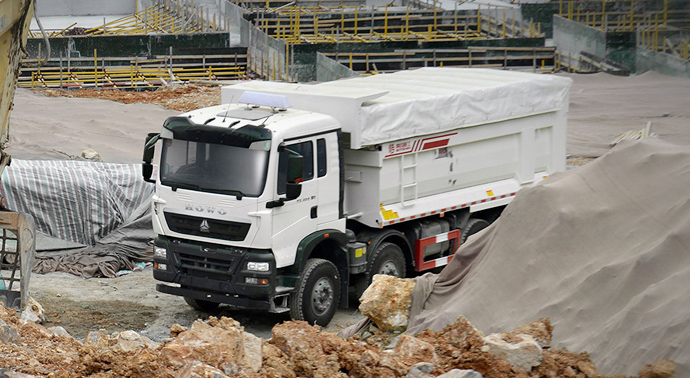
Dump Body Capacity for Sand, Gravel, and Aggregates
The HOWO TX 8X4 can accommodate different dump-body designs. Published configurations commonly describe body volumes within an approximate 18–28 cubic metre range. Actual capacity depends on the selected body dimensions and specification.
A larger body does not always permit a heavier load. Sand, wet soil, gravel, and crushed stone have different densities. Dense materials can reach the truck’s approved weight limit before filling the entire body.
For that reason, operators should consider both volume and weight. The correct body helps balance carrying efficiency, legal compliance, and practical unloading requirements.
SINOTRUK HOWO TX 8X4 Dump Truck 2025 Design and Road Presence
A Commanding Heavy-Duty Exterior
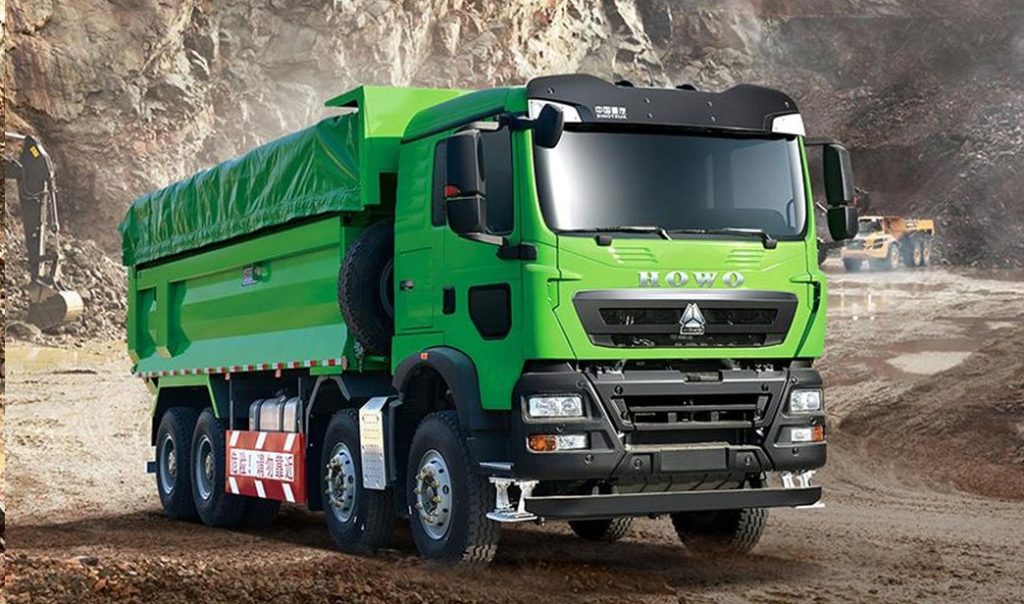
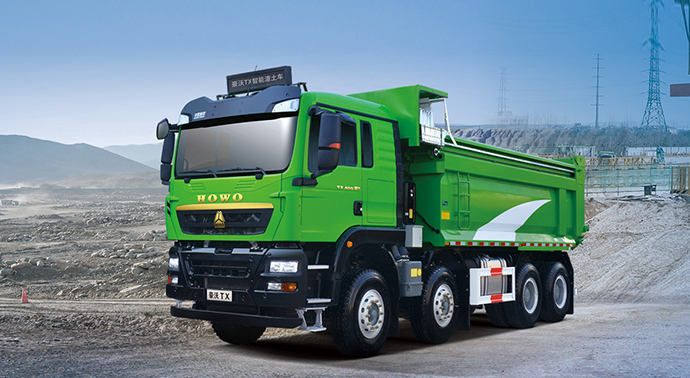
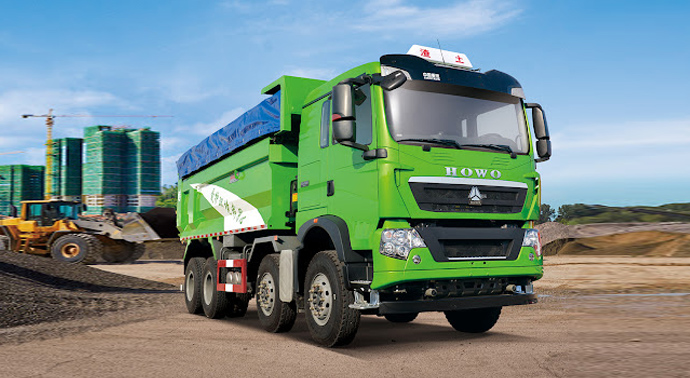
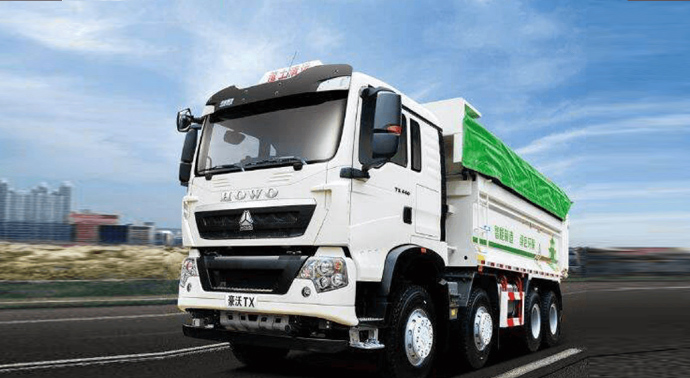
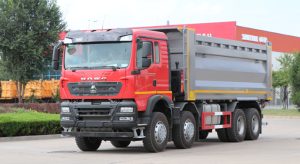
The HOWO TX features a substantial front profile and a purposeful commercial-truck design. Its strong visual presence communicates capability across construction sites, industrial yards, and transport depots.
The front grille, elevated cab, large wheels, and heavy-duty stance suit the truck’s demanding role. These elements also create a professional appearance for businesses that operate branded commercial fleets.
A well-presented truck can strengthen a company’s image when it arrives at a construction project or customer site. Buyers can also discuss available colours and body finishes when confirming the specific vehicle.
A Chassis Designed for Demanding Work
Heavy-duty hauling requires a chassis that supports the truck’s operating demands. Advertised HOWO TX configurations use a reinforced ladder-frame design and heavy-duty suspension components.
These components help support the vehicle during regular transport and loading cycles. However, the correct maintenance schedule remains essential for long-term performance.
Inspect the chassis for damage, corrosion, structural alterations, and signs of overloading. Buyers should also verify that the dump body and hydraulic equipment match the truck’s intended work.
SINOTRUK HOWO TX 8X4 Dump Truck 2025 Cabin Comfort
A Practical Cabin for Professional Drivers
Commercial drivers spend many hours behind the wheel. Cabin comfort therefore plays an important role in daily productivity and driver satisfaction.
Advertised TX-F configurations can include air conditioning, an adjustable driver’s seat, seat belts, and an adjustable steering wheel. Certain versions also feature a sleeper berth for additional convenience during extended assignments.
These features help create a more comfortable working environment. Buyers should confirm which equipment comes with the particular truck before completing a purchase.
Air Conditioning and Driver Convenience
Air conditioning helps drivers manage warm conditions during long working days. An adjustable seat supports a more suitable driving position. Adjustable steering can also help drivers find a comfortable position behind the wheel.
Together, these features support everyday usability across different routes and work schedules. Drivers should still take appropriate breaks and follow safe-driving practices.
Visibility and Practical Controls
A commercial truck needs clear visibility and accessible controls. The HOWO TX cabin design supports the driver’s working environment through its windscreen, mirrors, and conventional control layout.
During inspection, check mirror coverage, lights, wipers, seat adjustment, and dashboard indicators. Test the air conditioning and other electrical accessories. These checks help identify maintenance needs before the truck enters service.
SINOTRUK HOWO TX 8X4 Dump Truck 2025 Fuel Economy and Affordable Ownership
Improving Fuel Efficiency Through Smart Operation
Fuel represents a major operating expense for heavy commercial vehicles. The HOWO TX 8X4’s actual consumption depends on cargo weight, road gradients, traffic, driving style, tire condition, and maintenance.
No single fuel-consumption figure accurately represents every operation. A loaded truck climbing steep gradients will usually consume fuel differently from one travelling on a level road.
Fleet owners can improve fuel management through consistent operating practices. Train drivers to accelerate smoothly and choose suitable gears. Maintain correct tire pressures and avoid unnecessary idling.
Plan routes to reduce empty journeys wherever practical. Coordinate deliveries to minimize waiting time and unproductive travel. These measures can improve operating efficiency without compromising safety.
Maintenance Planning Helps Control Costs
Affordable ownership depends on the full cost of operating a truck. Purchase price alone does not reveal the vehicle’s long-term value.
Include fuel, tires, lubricants, servicing, insurance, licensing, repairs, and downtime in your calculations. Also consider the availability of suitable replacement parts and qualified technicians.
Follow the manufacturer’s service intervals and use compatible fluids and components. Inspect the cooling system, brakes, suspension, and drivetrain regularly. Address developing faults promptly to reduce the risk of expensive breakdowns.
Calculate Cost Per Trip and Cost Per Tonne
Business owners should measure performance using actual operating records. Record fuel purchases, kilometres travelled, cargo weight, maintenance expenses, and completed deliveries.
Divide total trip expenses by the tonnes delivered to estimate cost per tonne. This calculation helps compare routes, contracts, and vehicle configurations.
Reliable records can also reveal inefficient journeys and excessive idle time. Over time, this information supports better budgeting and more informed fleet decisions.
SINOTRUK HOWO TX 8X4 Dump Truck 2025 Reliability and Durability
Built for Heavy Commercial Applications
The HOWO TX platform targets demanding commercial transport operations. Its heavy-duty chassis, diesel powertrain, multi-gear transmission, and reinforced running gear support its intended role.
Construction companies often need trucks that can manage repeated loading and unloading cycles. Quarry operators also need equipment suited to abrasive materials and challenging work environments.
Actual reliability depends on correct operation, maintenance quality, road conditions, and load management. A thorough inspection helps buyers assess the individual vehicle’s condition and service needs.
Protecting the Engine and Drivetrain
Regular maintenance helps preserve the truck’s performance. Check engine oil, coolant, filters, belts, hoses, and other service items according to the manufacturer’s schedule.
Monitor unusual noises, warning lights, fluid leaks, and changes in engine performance. Arrange professional diagnosis when a fault appears.
Also inspect the gearbox, differential, propeller shafts, and axle components. Correct lubrication and timely servicing help protect these expensive systems.
Braking and Suspension Maintenance
A loaded dump truck requires a dependable braking system. The advertised HOWO family uses heavy-duty braking arrangements, with exact equipment depending on specification.
Inspect brake components, air-system performance, tires, suspension springs, and steering joints regularly. Check the vehicle before demanding routes and after unusually severe operating conditions.
Never exceed the truck’s approved load limits. Overloading can increase stopping distances and place excessive stress on tires, brakes, axles, and chassis components.
SINOTRUK HOWO TX 8X4 Dump Truck 2025 Hydraulic Tipping System
Efficient Loading and Unloading Operations
A dump truck’s tipping system helps operators unload bulk materials efficiently. The HOWO TX 8X4 is available with hydraulic lifting arrangements that suit its dump-body configuration.
The selected body and hydraulic system should match the materials and operating environment. Buyers should confirm the lifting mechanism, cylinder arrangement, body construction, and control system.
A suitable setup helps streamline unloading at construction sites and material yards. It can also reduce the time required for each delivery cycle.
Choosing the Right Dump Body
Different materials demand different body specifications. Sand and soil may require different body dimensions from large rocks or abrasive quarry aggregates.
Discuss floor thickness, side-wall construction, body volume, and steel grade with the supplier. Consider wear resistance and the expected frequency of loading cycles.
A suitable body helps balance durability, carrying volume, and tare weight. The final configuration should remain within the truck’s approved weight limits.
Safe Tipping Practices
Operators should use the hydraulic system according to the manufacturer’s instructions. Position the truck on firm, level ground before raising the body. Check overhead clearance and maintain a safe distance from people and structures.
Avoid tipping on unstable or sloping surfaces. Uneven ground can increase the risk of vehicle instability. Lower the body fully before moving away from the unloading point.
SINOTRUK HOWO TX 8X4 Dump Truck 2025 for Construction in Uganda
Supporting Building and Infrastructure Projects
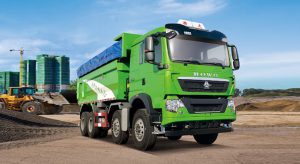
Uganda’s construction sector requires reliable movement of aggregates and earth materials. The HOWO TX 8X4 can support projects that need regular bulk-material deliveries.
Contractors may use it to transport sand, gravel, crushed stone, and suitable earth materials. It can also support roadworks and other infrastructure activities when its specification matches the task.
Its four-axle layout and heavy-duty design make it worth considering for demanding transport assignments. Project managers should assess route conditions, loading facilities, and legal weight limits before selecting the vehicle.
Quarrying and Aggregate Transport
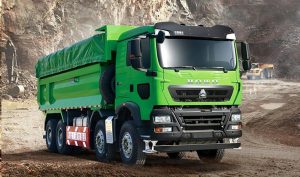
Quarries need efficient movement between extraction areas, stockpiles, and delivery points. The HOWO TX 8X4 can support these operations when operators choose an appropriate body and payload.
The correct configuration helps balance load volume with material density. Quarry managers should also consider tire durability, maintenance access, and the distance between loading and unloading locations.
Consistent servicing can help reduce interruptions during busy production periods. Clear loading procedures also protect the truck and its operators.
Commercial Haulage Opportunities
Transport businesses can evaluate the HOWO TX 8X4 for contracts involving bulk construction materials. Its suitability depends on the cargo, journey distance, site access, and customer requirements.
Before accepting a contract, calculate the expected number of trips and operating costs. Include return journeys, waiting periods, fuel, maintenance, and driver expenses.
This approach helps businesses establish realistic rates and protect their margins. It also supports more responsible investment decisions.
SINOTRUK HOWO TX 8X4 Dump Truck 2025 Versatility and Business Value
Match the Truck to Your Business Goals
A heavy-duty truck should support a clear operating plan. Buyers should identify their regular cargo, daily distance, loading points, and unloading conditions.
They should also estimate average payload requirements and annual kilometres. These figures help determine whether an 8×4 configuration offers the right balance of capacity and cost.
The HOWO TX 8X4 may suit operators with demanding bulk-haulage requirements. Businesses with lighter cargo or restricted access routes should compare other configurations before deciding.
Support Fleet Expansion
An additional dump truck can help a business respond to growing transport demand. It may also provide extra capacity during busy project periods.
However, fleet expansion requires careful financial planning. Compare the expected revenue against financing, fuel, wages, servicing, insurance, and licensing costs.
Choose a truck that supports profitable contracts rather than relying on maximum capacity alone. Proper planning helps protect cash flow and improve asset utilization.
Professional Road Presence
The HOWO TX combines a substantial exterior with a purpose-built commercial layout. Its styling suits businesses seeking a professional image across construction and transport operations.
Companies can also explore suitable fleet branding and body colours. Confirm the available options with the seller before placing an order.
Why Consider the SINOTRUK HOWO TX 8X4 Dump Truck 2025?
The SINOTRUK HOWO TX 8X4 brings several important qualities to heavy-duty transport planning.
- 371 HP diesel power: The commonly advertised WD615.47 engine supports demanding commercial hauling.
- Four-axle configuration: The 8×4 layout supports heavy-duty load distribution within approved limits.
- Manual transmission: Ten forward gears provide a broad selection for different operating conditions.
- Practical cabin: Selected versions offer air conditioning, adjustable seating, and a sleeper berth.
- Flexible dump-body options: Buyers can evaluate body volumes and materials for their intended cargo.
- Commercial versatility: The truck can support construction, quarrying, infrastructure, and aggregate transport.
- Cost-management potential: Careful maintenance, route planning, and driver training can improve operating efficiency.
- Business-focused design: Its heavy-duty format suits operators who need a dedicated bulk-material transport vehicle.
The best choice always depends on the exact specification and your working requirements. Verify the individual truck’s condition, documents, payload, and equipment before purchase.
Buying the SINOTRUK HOWO TX 8X4 Dump Truck 2025 Through Car Dealer Uganda
Choosing a commercial truck deserves careful research and clear technical information. Car Dealer Uganda helps buyers explore vehicle options that match their business requirements.
Before committing, request the full specification sheet for the available truck. Confirm the model year, engine output, transmission, axle ratings, dump-body capacity, and fuel-tank size.
Ask for the exact tare weight and gross vehicle weight. Confirm the approved maximum payload rather than relying on general advertising figures. Review the service history, inspection findings, ownership documents, and registration requirements.
You should also establish the truck’s condition and any included accessories. If the vehicle includes hydraulic equipment, test its operation under appropriate inspection conditions.
Finally, calculate your anticipated operating expenses and revenue. A clear business case helps you select equipment that meets your transport needs.
Frequently Asked Questions About the SINOTRUK HOWO TX 8X4 Dump Truck 2025
1. How much horsepower does the SINOTRUK HOWO TX 8X4 Dump Truck 2025 produce?
A commonly advertised configuration produces 371 HP from the WD615.47 six-cylinder diesel engine. Other engine options may exist. Confirm the exact engine and horsepower on the available truck.
2. What is the maximum load of the SINOTRUK HOWO TX 8X4 Dump Truck 2025?
The maximum approved payload depends on the specific configuration and applicable weight limits. Some advertisements quote payloads around 40 tonnes, but buyers should verify the individual truck’s documentation.
Do not confuse payload with gross vehicle weight. Always follow the registered limits and axle ratings.
3. What is the weight of the SINOTRUK HOWO TX 8X4 Dump Truck 2025?
Published configurations vary. One commonly advertised version lists approximately 17,000 kg of curb weight and up to 60,000 kg of total weight.
These figures do not apply to every variant. Request the specific vehicle’s official weight information before purchase.
4. What engine does the SINOTRUK HOWO TX 8X4 Dump Truck 2025 use?
A widely advertised configuration uses the WD615.47 turbocharged diesel engine. It features six cylinders, intercooling, and approximately 9.726 litres of displacement.
Other configurations may use different engines. Verify the engine code on the particular vehicle.
5. Is the SINOTRUK HOWO TX 8X4 suitable for construction work in Uganda?
It can suit construction and infrastructure transport when its configuration matches the job. Contractors should evaluate route conditions, payload requirements, site access, and operating costs.
They should also verify compliance with Ugandan vehicle and road-weight regulations.
6. Can the SINOTRUK HOWO TX 8X4 transport sand and gravel?
Yes, suitable dump-body configurations can transport sand, gravel, and other compatible bulk materials. The permitted cargo weight depends on material density and the truck’s approved payload.
Operators should never fill the body beyond the legal weight limit.
7. What is the dump-body capacity of the SINOTRUK HOWO TX 8X4?
Published configurations commonly offer approximately 18–28 cubic metres. Actual capacity depends on the body dimensions and selected specification.
Ask the seller to confirm the installed body’s volume and construction material.
8. Does the SINOTRUK HOWO TX 8X4 have air conditioning?
Advertised TX-F configurations can include air conditioning. Equipment varies by version, so buyers should verify its presence and operation during inspection.
9. How many gears does the SINOTRUK HOWO TX 8X4 have?
A common configuration uses the HW19710 manual gearbox. It offers ten forward gears and two reverse gears.
Confirm the installed transmission before purchase because specifications can differ.
10. Is the SINOTRUK HOWO TX 8X4 fuel-efficient?
Fuel efficiency depends on payload, terrain, traffic, driving habits, and maintenance. Smooth driving, proper tire pressure, route planning, and reduced idling can help control consumption.
Ask the seller for any available operating records and evaluate them against your intended work.
11. What businesses can use the SINOTRUK HOWO TX 8X4 Dump Truck 2025?
Construction contractors, quarry operators, infrastructure companies, and bulk-material transport businesses may find it suitable. Its value depends on the contracts, cargo, and routes involved.
Compare the truck’s operating costs with your expected revenue before investing.
12. What should I check before buying the SINOTRUK HOWO TX 8X4?
Inspect the engine, gearbox, axles, brakes, chassis, tires, cabin, and hydraulic system. Verify the dump-body condition and check for structural damage or signs of overloading.
Review the vehicle’s documents, service history, chassis number, and approved weight limits. Arrange an independent commercial-vehicle inspection when possible.
13. Is the SINOTRUK HOWO TX 8X4 available in different configurations?
Yes, published specifications show differences in engines, dump bodies, cabin equipment, and other components. Buyers should confirm the exact configuration of the vehicle listed for sale.
14. How can I estimate the operating cost of the SINOTRUK HOWO TX 8X4?
Track fuel, maintenance, tires, driver expenses, insurance, licensing, and downtime. Divide the total cost by completed trips or tonnes delivered.
Use actual operating records to develop a realistic cost estimate for your business.
15. How can I enquire about the SINOTRUK HOWO TX 8X4 Dump Truck 2025 on Car Dealer Uganda?
Contact Car Dealer Uganda through its available dealership channels. Ask for the current price, availability, full specifications, photographs, inspection arrangements, and purchasing requirements.
Confirm all vehicle details before making a payment or finalizing a purchase.
Find Your Next Heavy-Duty Workhorse at Car Dealer Uganda
Your next construction contract deserves equipment that matches its demands. The SINOTRUK HOWO TX 8X4 Dump Truck 2025 offers a compelling combination of 371 HP diesel power, heavy-duty engineering, practical cabin features, and adaptable bulk-haulage capability.
Whether you manage construction projects, transport aggregates, or operate a commercial fleet, choose your truck with clear business objectives. Confirm the payload, operating costs, technical specification, and legal requirements before committing.
Contact Car Dealer Uganda today to enquire about the SINOTRUK HOWO TX 8X4 Dump Truck 2025. Request the latest price, verify availability, and discuss the specifications that matter to your business. Take the next step toward strengthening your transport capacity with a truck selected for your real-world operating needs.


