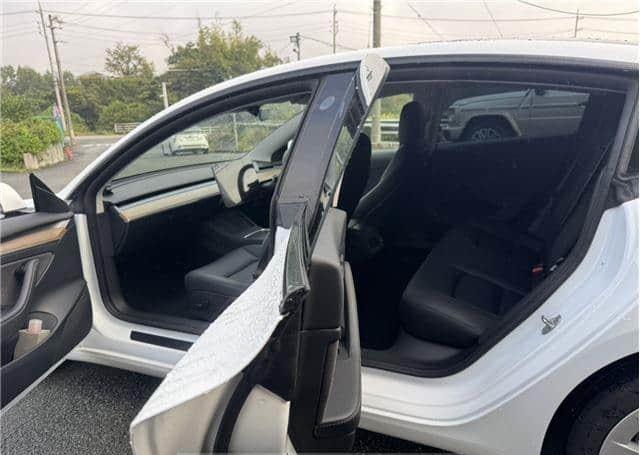
As an experienced car inspector in Uganda, I have encountered a diverse range of vehicles tailored to our unique road conditions. When considering the Tesla Model 3 15.4 2021 for Ugandan use, different buyer perspectives come to the forefront. City commuters often seek a reliable electric vehicle that can navigate congested streets while offering minimal running costs. For those traveling upcountry, the durability and range of the vehicle become crucial, especially when faced with less maintained roads and longer distances. Budget-conscious buyers might also weigh the initial investment against long-term maintenance costs and the availability of charging infrastructure. In this context, it’s essential to address some focused concerns: How well does the Tesla’s suspension cope with the pothholed roads found in many Ugandan areas? What is the availability of charging stations, particularly in rural or upcountry settings? Lastly, considering the vehicle’s advanced technology, how easily can it be serviced or repaired locally if issues arise?
Answer
Verdict
Suitable with conditions. The Tesla Model 3 offers good efficiency and advanced features, but its performance may be impacted by Kampala’s traffic, potholes, and the state of upcountry roads.
Performance Overview
The Tesla Model 3 is known for its electric powertrain, providing a range of approximately 400 to 500 km per charge, depending on the specific trim. This makes it a feasible option for urban commuting and some longer journeys in Uganda, despite the challenging road conditions.
Efficiency in Uganda
In terms of energy consumption, the Model 3 typically achieves around 15 to 20 km per kWh. This varies with driving style, terrain, and load, making it essential to monitor consumption, especially on less-maintained roads.
Road Conditions
Driving in Uganda presents unique challenges. Kampala is notorious for its traffic congestion and poorly maintained roads, featuring numerous potholes and speed humps. During the rainy season, these conditions can worsen, necessitating caution.
Charging Infrastructure
While the charging network is growing, availability remains limited in some areas. Potential owners should confirm the existence of nearby charging stations before pursuing long trips or daily commutes.
Safety and Comfort
The Model 3 scores highly in safety ratings, equipped with advanced safety features that can enhance driving security on congested Kampala roads. However, its lower ground clearance may require cautious navigation over speed bumps and poorly maintained rural roads.
Summary
The Tesla Model 3 can be a suitable choice for Ugandan road conditions, particularly for urban use. Its efficiency and technology are beneficial, but awareness of local charging infrastructure and road quality is essential for potential buyers.
FAQs
1. What is the range of the Tesla Model 3 in Uganda?
The Tesla Model 3 can offer a range of approximately 400 to 500 km per charge, depending on the trim level and driving conditions.
2. How does the Model 3 perform with potholes and speed humps?
While the Model 3 has advanced features, its lower ground clearance may make it less ideal for navigating potholes and speed humps. Caution is advised.
3. Is there adequate charging infrastructure in Uganda?
The charging infrastructure is growing but remains limited in some areas. It’s crucial to check local availability before extensive travel.
4. Can the Model 3 handle rainy season conditions?
The Model 3 can handle rainy conditions but may be prone to hydroplaning on poorly maintained roads. Drivers should exercise caution.
5. What is the energy consumption of the Model 3?
Energy consumption typically ranges from 15 to 20 km per kWh, but this may vary based on driving style, terrain, and load.
The LAND ROVER DISCOVERY 3 2009, produced in 2009, embodies a robust design and advanced features that cater to off-road enthusiasts, making it a notable contender for Uganda’s diverse terrains....
The Land Rover Discovery 3 Manual Diesel 2008 is a robust vehicle well-suited for the varied terrains of Uganda, where off-road driving is often essential. Known for its advanced four-wheel...
The Land Rover Discovery 30-Diesel 2015 is a vehicle designed for both luxury and rugged terrain, making it a popular choice for adventurers in Uganda. With its powerful diesel engine,...
As an experienced car inspector in Uganda, I often encounter potential buyers eager to find a vehicle that meets their unique needs. Uganda’s diverse terrains—from bustling city streets to rugged...
Family owned dealership of new and pre-owned vehicles with several locations across the Uganda. Lowest prices and the best customer service guaranteed.
You're almost there, select at least one more to compare!
We use cookies to ensure that we give you the best experience on our website. If you continue to use this site we will assume that you are happy with it.
You can revoke your consent any time using the Revoke consent button.