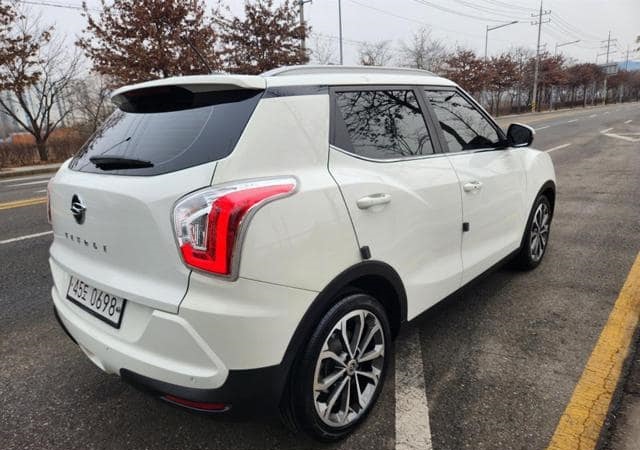
The 2017 SsangYong Tivoli has garnered attention for its compact design and modern features, making it a notable contender in Uganda’s burgeoning automotive market. As consumers increasingly prioritize fuel efficiency alongside performance, evaluating the Tivoli’s fuel economy becomes essential for potential car buyers. This vehicle, equipped with a choice of petrol and diesel engines, promises a competitive fuel consumption rate, appealing to both urban commuters and those navigating rural terrains. Factors such as driving conditions, maintenance, and individual driving habits further influence its efficiency. Understanding the Tivoli’s performance in real-world scenarios provides a clearer picture of its viability for Ugandan roads. With the rising cost of fuel, insights into the Tivoli’s fuel efficiency can significantly impact purchasing decisions for Ugandan consumers.
Understanding Fuel Efficiency in the SSANGYONG TIVOLI 2017
The SSANGYONG TIVOLI 2017 is gaining popularity in Uganda as a compact SUV with a stylish design and practical features. One of the most pressing questions among potential buyers is its fuel efficiency. In this article, we explore how this vehicle performs in real-world conditions.
Engine Specifications
The 2017 TIVOLI is equipped with a 1.6-liter inline-four engine, available in both petrol and diesel variants. This engine provides a balance of power and efficiency, appealing to those who desire performance without unnecessary fuel consumption.
Fuel Economy Ratings
According to the manufacturer, the petrol variant offers around 17 km/l, while the diesel version boasts an impressive 22 km/l. These figures may vary based on driving habits and conditions. However, on Ugandan roads, the diesel variant particularly shines with its extended range.
Driving Conditions in Uganda
Urban driving in Kampala can impact fuel efficiency due to traffic congestion and frequent stops. The TIVOLI’s engine is designed to handle these conditions with decent throttle response, helping drivers achieve better fuel efficiency in stop-and-go situations.
Real-World Experience
Many TIVOLI owners in Uganda report averaging around 15-18 km/l in city driving and up to 20-24 km/l on highways. These experiences suggest that while the official figures are useful, actual performance can differ based on individual driving styles.
Factors Influencing Fuel Efficiency
Driving Habits
Aggressive acceleration and hard braking can significantly reduce fuel efficiency. Practicing smooth driving can help users maximize fuel economy.
Vehicle Maintenance
Regular maintenance, including oil changes and tire pressure checks, can improve fuel efficiency. A well-maintained vehicle performs better and consumes less fuel.
Load and Cargo
Carrying extra weight affects fuel efficiency. Limiting unnecessary items in the vehicle can help achieve better mileage.
Final thoughts
The SSANGYONG TIVOLI 2017 emerges as a commendable option for those seeking a fuel-efficient, practical vehicle in Uganda. While the diesel variant stands out in terms of overall economy, individual driving habits and conditions will ultimately influence real-world performance.
Summary
The SSANGYONG TIVOLI 2017 offers competitive fuel efficiency, especially in the diesel variant. With high demands on fuel performance in the Ugandan context, understanding its efficiency metrics will aid potential buyers in making informed decisions.
FAQs
1. What is the average fuel consumption of the SSANGYONG TIVOLI 2017?
The petrol variant averages around 17 km/l, while the diesel variant can achieve up to 22 km/l under optimal conditions.
2. Does driving style affect fuel efficiency?
Yes, smooth driving habits, such as gentle acceleration and braking, can improve overall fuel efficiency.
3. How can I improve the fuel efficiency of my TIVOLI?
Regular maintenance, proper tire pressure, and reducing cargo weight can all help improve fuel efficiency.
4. Is the diesel variant more fuel-efficient than the petrol variant?
Yes, the diesel variant generally offers better fuel economy compared to the petrol option, especially in urban driving conditions.
5. What should I consider when purchasing the TIVOLI for fuel efficiency?
Consider the type of driving (city vs. highway), personal driving habits, and whether you choose petrol or diesel based on your fuel economy needs.
The LAND ROVER DISCOVERY 3 2009, produced in 2009, embodies a robust design and advanced features that cater to off-road enthusiasts, making it a notable contender for Uganda’s diverse terrains....
The Land Rover Discovery 3 Manual Diesel 2008 is a robust vehicle well-suited for the varied terrains of Uganda, where off-road driving is often essential. Known for its advanced four-wheel...
The Land Rover Discovery 30-Diesel 2015 is a vehicle designed for both luxury and rugged terrain, making it a popular choice for adventurers in Uganda. With its powerful diesel engine,...
As an experienced car inspector in Uganda, I often encounter potential buyers eager to find a vehicle that meets their unique needs. Uganda’s diverse terrains—from bustling city streets to rugged...
Family owned dealership of new and pre-owned vehicles with several locations across the Uganda. Lowest prices and the best customer service guaranteed.
You're almost there, select at least one more to compare!
We use cookies to ensure that we give you the best experience on our website. If you continue to use this site we will assume that you are happy with it.
You can revoke your consent any time using the Revoke consent button.