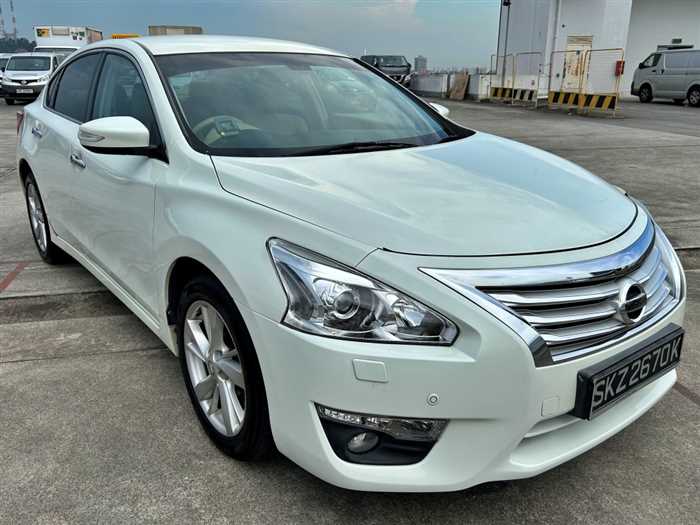
As an experienced car inspector in Uganda, I understand the unique needs of buyers navigating the local automotive landscape. For those commuting in Kampala, the efficiency of the Nissan Teana 2016 can significantly impact their daily routines, especially with the city’s notorious traffic. Buyers who frequently travel upcountry seek a vehicle that can handle varying road conditions while still offering comfort and reliability. Additionally, budget-conscious consumers are keen to balance fuel efficiency with maintenance costs, as these can heavily influence long-term ownership satisfaction. Given these perspectives, how does the Teana’s fuel consumption compare to other vehicles in its class? What maintenance challenges should potential owners be aware of? Lastly, for those making both city commutes and longer trips, does the vehicle offer a practical balance of power and efficiency, ensuring a smooth ride under varied driving conditions?
Answer
Verdict
Suitable with conditions. The NISSAN TEANA 2016 offers a comfortable driving experience; however, its fuel efficiency may vary significantly based on local driving conditions, especially in Kampala’s traffic and on upcountry roads.
Fuel Efficiency in Uganda
The NISSAN TEANA 2016 typically delivers a fuel efficiency of approximately 8 to 12 kilometers per liter, depending on the model’s trim and driving conditions. In congested Kampala traffic, fuel consumption may lean towards the lower end of this range, particularly due to frequent stops and starts.
Driving Conditions
Kampala traffic can be heavy, which affects the vehicle’s performance and fuel efficiency. Also, speed humps and potholes prevalent in urban areas can further strain the vehicle’s fuel economy as they often require frequent acceleration and deceleration.
Effect of Rainy Season
During the rainy season, road conditions can worsen, with increased pothole formation and slippery surfaces. This may lead to slower driving speeds and potentially lower fuel efficiency for the TEANA, especially when traversing unpaved or poorly maintained upcountry roads.
Performance on Upcountry Roads
When driving on upcountry roads, which often lack maintenance, the TEANA’s performance may vary. While it is designed for comfort, off-road driving can affect fuel efficiency and overall vehicle handling, making it less suitable for rural areas with rough terrain.
Engine Specifications
The NISSAN TEANA 2016 generally comes with a 2.0L to 3.5L engine option. However, fuel efficiency can vary by trim, so verifying specifics via VIN is advisable for the most accurate information.
Summary
The NISSAN TEANA 2016 can be considered a suitable option for daily commuting in Uganda, particularly for those primarily driving within urban limits. However, potential buyers should be wary of the varied fuel efficiency depending on driving conditions, especially in traffic-heavy areas and during the rainy season.
FAQs
What is the average fuel consumption of the NISSAN TEANA 2016?
The average fuel consumption ranges between 8 to 12 kilometers per liter, varying by conditions and trim.
Is the NISSAN TEANA suitable for rural driving?
While it can handle rural roads, its efficiency may decrease on unpaved and poorly maintained surfaces.
What should I consider for driving in Kampala traffic?
Frequent stops and slow speeds in heavy traffic may lower fuel efficiency, causing increased fuel consumption.
How do weather conditions affect my fuel economy in a NISSAN TEANA?
Rainy conditions can negatively impact driving speed and efficiency, particularly on slippery or damaged roads.
Where can I find the specific fuel efficiency for my TEANA model?
To find the exact fuel efficiency, it is best to verify through the VIN or consult the dealer for model-specific details.
The LAND ROVER DISCOVERY 3 2009, produced in 2009, embodies a robust design and advanced features that cater to off-road enthusiasts, making it a notable contender for Uganda’s diverse terrains....
The Land Rover Discovery 3 Manual Diesel 2008 is a robust vehicle well-suited for the varied terrains of Uganda, where off-road driving is often essential. Known for its advanced four-wheel...
The Land Rover Discovery 30-Diesel 2015 is a vehicle designed for both luxury and rugged terrain, making it a popular choice for adventurers in Uganda. With its powerful diesel engine,...
As an experienced car inspector in Uganda, I often encounter potential buyers eager to find a vehicle that meets their unique needs. Uganda’s diverse terrains—from bustling city streets to rugged...
Family owned dealership of new and pre-owned vehicles with several locations across the Uganda. Lowest prices and the best customer service guaranteed.
You're almost there, select at least one more to compare!
We use cookies to ensure that we give you the best experience on our website. If you continue to use this site we will assume that you are happy with it.
You can revoke your consent any time using the Revoke consent button.