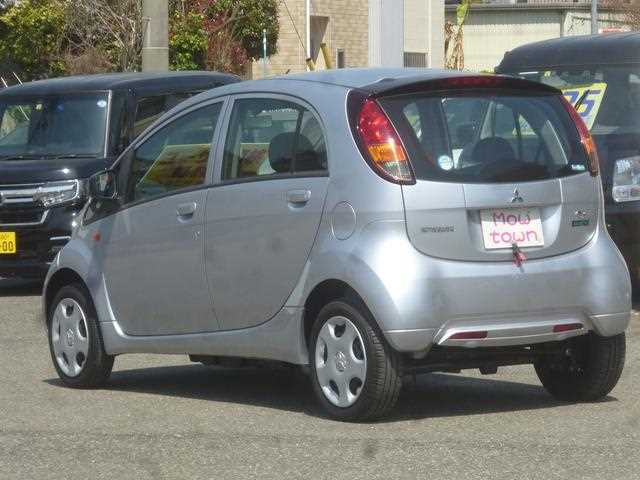
As an experienced car inspector in Uganda, I understand the unique challenges and needs of potential car buyers in our diverse landscape. Buyers looking for a vehicle primarily for city commuting often prioritize efficiency and compactness, while those intending to venture upcountry require durability and the ability to handle rough terrains. Budget-conscious consumers also play a crucial role in this market, seeking vehicles with manageable maintenance costs and fuel efficiency. However, with the Mitsubishi i-MiEV being an electric vehicle, one may wonder: how does its battery life hold up under Uganda’s varied driving conditions? Is the infrastructure for charging stations adequate to support regular use, especially in rural areas? Additionally, what are the long-term maintenance implications of owning an electric vehicle in a market that traditionally favors petrol and diesel options? These are essential considerations when evaluating the suitability of the i-MiEV for Ugandan roads.
Answer
Verdict
Suitable with conditions. The MITSUBISHI I-MIEV 2013 can perform adequately in urban settings like Kampala but may struggle on poorly maintained upcountry roads, especially during the rainy season.
Performance in Kampala Traffic
The I-MIEV has a compact design, making it suitable for navigating the congested streets of Kampala. Its electric motor provides instant torque, allowing for quick starts, which is advantageous in stop-and-go traffic. However, its limited range may require careful planning to avoid running out of charge.
Handling of Road Conditions
While the I-MIEV exhibits adequate stability on smooth surfaces, it struggles with potholes and speed humps common in urban areas. The suspension system is tuned for comfort but may not handle rough terrains well, especially when fully loaded.
Range and Efficiency
The I-MIEV has an estimated range of 100-150 km on a full charge, but actual usage may vary based on driving habits and road conditions. The vehicle’s energy consumption typically falls between 15-20 kWh per 100 km, which translates to approximately 5-7 km per kilowatt-hour.
Charging Infrastructure
In Uganda, charging infrastructure is still developing. Public charging stations are limited, especially in rural areas, making it essential to have access to home charging. This is crucial for users planning to cover longer distances.
Environmental Impact
As an electric vehicle, the I-MIEV emits no tailpipe pollutants, making it a more environmentally friendly option compared to conventional gasoline vehicles. This aligns with global efforts toward sustainable transport but is dependent on the source of electricity used for charging.
Summary
The MITSUBISHI I-MIEV 2013 is suitable for urban driving in Uganda but comes with limitations regarding road conditions and charging availability. Proper planning is essential for longer journeys, particularly when venturing upcountry.
FAQs
1. What is the range of the MITSUBISHI I-MIEV 2013 on a full charge?
The estimated range is between 100-150 km, varying based on driving habits and road conditions.
2. How does the I-MIEV perform on pothole-ridden roads?
While it has a comfortable suspension, the I-MIEV may struggle with potholes, which could impact ride quality.
3. Is home charging feasible in Uganda?
Home charging is feasible for many users, but it’s important to ensure your home has the necessary electrical capacity and setup.
4. Can the I-MIEV handle rainy season conditions?
The I-MIEV can handle wet conditions, but the risk of hydroplaning is greater on slick, poorly maintained roads.
5. Where can I find charging stations for the I-MIEV in Uganda?
Charging stations are limited, primarily located in urban areas. Confirm the availability of charging facilities in advance, especially for longer trips.
The LAND ROVER DISCOVERY 3 2009, produced in 2009, embodies a robust design and advanced features that cater to off-road enthusiasts, making it a notable contender for Uganda’s diverse terrains....
The Land Rover Discovery 3 Manual Diesel 2008 is a robust vehicle well-suited for the varied terrains of Uganda, where off-road driving is often essential. Known for its advanced four-wheel...
The Land Rover Discovery 30-Diesel 2015 is a vehicle designed for both luxury and rugged terrain, making it a popular choice for adventurers in Uganda. With its powerful diesel engine,...
The 2009 Land Rover Discovery 4 Automatic Diesel stands out for its robust engineering and off-road capabilities, making it a potential fit for Uganda’s diverse terrain. With a powerful diesel...
Family owned dealership of new and pre-owned vehicles with several locations across the Uganda. Lowest prices and the best customer service guaranteed.
You're almost there, select at least one more to compare!
We use cookies to ensure that we give you the best experience on our website. If you continue to use this site we will assume that you are happy with it.
You can revoke your consent any time using the Revoke consent button.