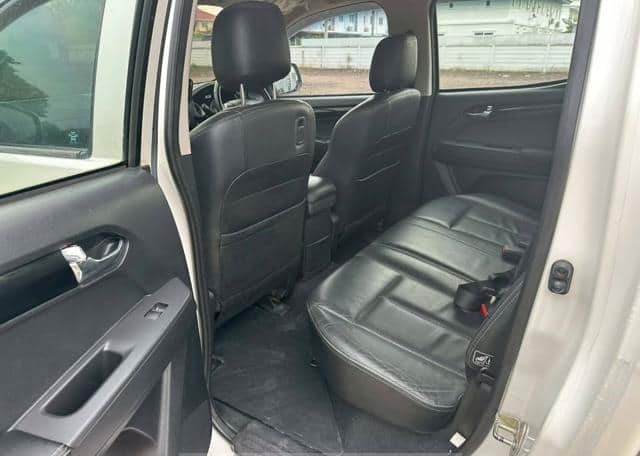
As an experienced car inspector in Uganda, I often encounter a variety of vehicles, each tailored to different needs and terrains. The ISUZU D-MAX 3.0 Double Cab, a popular model, raises important considerations for potential buyers. For those focused on city commuting, the question arises: does the vehicle provide the agility required for navigating urban traffic and cramped spaces? For buyers eyeing upcountry travel, it’s essential to assess its capability in handling rough and unpredictable terrains that are common outside urban areas. Additionally, budget-conscious individuals must consider both the initial cost and ongoing maintenance—does the D-MAX offer a reliable performance that justifies its investment over time? Beyond that, how well does its fuel efficiency align with the demands of daily use, whether in the city or the countryside? Can the vehicle withstand the diverse weather conditions prevalent in different regions of Uganda? Most importantly, will the resale value remain strong in the face of market fluctuations? These questions are crucial for anyone considering the D-MAX to ensure it aligns with their specific driving requirements and expectations.
Answer
Verdict
Suitable with conditions. The ISUZU D-MAX 3.0 DMAX DOUBLE CAB 2016 offers robust performance suited for diverse Ugandan terrains, but its efficiency may vary depending on road conditions such as potholes and speed humps common in Kampala.
Performance in Ugandan Context
The ISUZU D-MAX 3.0 provides a powerful diesel engine, which is essential for navigating the often challenging upcountry roads. Its robust construction enables it to handle rough terrains, although users should be mindful of its fuel consumption, which generally ranges from 10 to 12 km per liter but can vary by trim.
Handling Traffic and Road Conditions
Driving in Kampala can be a test due to traffic congestion and poorly maintained roads. The D-MAX’s elevated stance and four-wheel-drive capabilities are advantageous for avoiding speed humps and navigating potholes effectively. However, drivers should remain cautious during the rainy season, as roads can become slippery and treacherous.
Fuel Efficiency
Fuel efficiency is one of the critical considerations for Ugandan drivers. Expect a consumption rate around 10-12 km/l, depending on driving habits and load. This figure may change based on the trim level and should ideally be verified using the Vehicle Identification Number (VIN) for more accurate specifications.
Comfort and Space
The double cab configuration provides ample space for both passengers and cargo, making it a practical choice for families or commercial use. However, the ride comfort can be influenced by road conditions, especially if heavily loaded.
Maintenance and Service Availability
The D-MAX is generally known for its durability, but regular maintenance is essential, especially in areas with rough roads. Availability of service parts in Uganda is relatively good, as ISUZU has established a service network.
Summary
The ISUZU D-MAX 3.0 DMAX DOUBLE CAB 2016 is a suitable vehicle for Ugandan roads, particularly for those needing a dependable truck for both urban and rural driving. Drivers should consider fuel consumption variations and ensure regular maintenance to optimize performance.
FAQs
1. What type of fuel does the ISUZU D-MAX 3.0 require?
The D-MAX typically requires diesel fuel, which is widely available in Uganda.
2. How much cargo can the ISUZU D-MAX carry?
The payload capacity usually ranges from 1,000 to 1,200 kg, but it’s best to verify specifics based on the trim.
3. Is the ISUZU D-MAX good for off-road driving?
Yes, the D-MAX is designed for off-road conditions and can handle rugged terrains effectively.
4. What are the common maintenance issues for the D-MAX?
Common issues may include general wear and tear, but regular servicing can prevent major problems.
5. Can the ISUZU D-MAX accommodate large families?
Yes, the double cab configuration provides ample seating space for up to five passengers, making it suitable for families.
The LAND ROVER DISCOVERY 3 2009, produced in 2009, embodies a robust design and advanced features that cater to off-road enthusiasts, making it a notable contender for Uganda’s diverse terrains....
The Land Rover Discovery 3 Manual Diesel 2008 is a robust vehicle well-suited for the varied terrains of Uganda, where off-road driving is often essential. Known for its advanced four-wheel...
The Land Rover Discovery 30-Diesel 2015 is a vehicle designed for both luxury and rugged terrain, making it a popular choice for adventurers in Uganda. With its powerful diesel engine,...
As an experienced car inspector in Uganda, I often encounter potential buyers eager to find a vehicle that meets their unique needs. Uganda’s diverse terrains—from bustling city streets to rugged...
Family owned dealership of new and pre-owned vehicles with several locations across the Uganda. Lowest prices and the best customer service guaranteed.
You're almost there, select at least one more to compare!
We use cookies to ensure that we give you the best experience on our website. If you continue to use this site we will assume that you are happy with it.
You can revoke your consent any time using the Revoke consent button.