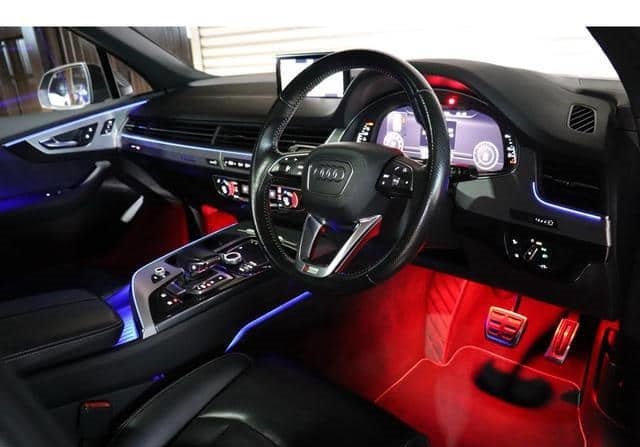
As an experienced car inspector in Uganda, I understand the unique demands that our roads and driving conditions impose on vehicles, especially for those considering the AUDI Q7 2.0TFSI 2017. Buyers often have varied needs that significantly influence their choice. City commuters may prioritize agility and fuel efficiency due to heavy traffic in urban centers, while those looking to travel upcountry frequently require durability and off-road capability to tackle rough terrains. Budget-conscious buyers are also a key demographic, focusing not only on the initial purchase price but also on long-term maintenance costs and availability of spare parts. In this context, it’s crucial to consider how the AUDI Q7’s performance aligns with these perspectives. Will its size and weight hinder maneuverability in congested urban areas? How does its suspension system handle the unpaved roads that are common in rural regions? And for prospective owners worried about expenses, will the maintenance of this luxury SUV become a burden over time, given the prevailing economic conditions? These concerns warrant careful consideration to ensure a well-informed decision.
Answer
Verdict
Suitable with conditions. The AUDI Q7 2.0TFSI 2017 offers excellent comfort and advanced features that can navigate Kampala traffic and upcountry roads, but its performance may be affected by poor road conditions, especially during the rainy season.
Performance
The AUDI Q7 2.0TFSI has a powerful engine that generally provides a fuel efficiency of about 8 to 10 km per liter, depending on the driving conditions and trim level. It’s essential to verify the exact specifications by the Vehicle Identification Number (VIN).
Comfort and Features
With spacious seating and high-quality interior design, the Q7 ensures a comfortable ride, which is significant for both city commuting and long journeys. Advanced infotainment and safety features enhance the driving experience, especially in unpredictable traffic scenarios.
Handling and Driveability
The Q7’s handling is commendable, but it may face challenges on pothole-ridden roads and speed humps common in Kampala. The adaptive air suspension can help, making it more suitable for navigating uneven surfaces.
Off-Road Capability
While primarily designed for on-road performance, the Q7 has some off-road capability that can be useful on rural paths. However, it’s not meant for extreme off-roading, so caution is advised when venturing off the beaten path.
Maintenance and Parts Availability
In Uganda, maintenance for AUDI vehicles may require sourcing specific parts, which can be challenging. It’s advisable to consider local service centers trained for luxury vehicles for optimal upkeep.
Summary
The AUDI Q7 2.0TFSI 2017 can be a suitable option for Ugandan roads, especially with its comfort and advanced features. However, it is important to be mindful of the road conditions and to consider maintenance logistics.
FAQs
What is the fuel efficiency of the AUDI Q7 2.0TFSI 2017?
The fuel efficiency generally ranges from 8 to 10 km per liter, varying by driving conditions and trim.
How does the AUDI Q7 handle potholes and speed humps?
While the Q7 has good handling characteristics, caution is needed on pothole-ridden streets and over speed humps, though adaptive air suspension can help soften the ride.
Are parts available locally for maintenance?
Parts availability may vary and could be more difficult to source compared to more common vehicles. Utilizing local luxury vehicle service centers is recommended.
Is the Q7 suitable for upcountry travel?
Yes, the Q7 is suitable for upcountry travel, but care must be taken on poorly maintained roads. Its off-road capabilities can assist on less ideal paths.
How does the rain affect driving with the Q7?
During the rainy season, the Q7’s advanced traction control systems can enhance driving stability, but drivers should remain cautious of slick surfaces and potential flooding on roads.
The LAND ROVER DISCOVERY 3 2009, produced in 2009, embodies a robust design and advanced features that cater to off-road enthusiasts, making it a notable contender for Uganda’s diverse terrains....
The Land Rover Discovery 3 Manual Diesel 2008 is a robust vehicle well-suited for the varied terrains of Uganda, where off-road driving is often essential. Known for its advanced four-wheel...
The Land Rover Discovery 30-Diesel 2015 is a vehicle designed for both luxury and rugged terrain, making it a popular choice for adventurers in Uganda. With its powerful diesel engine,...
As an experienced car inspector in Uganda, I often encounter potential buyers eager to find a vehicle that meets their unique needs. Uganda’s diverse terrains—from bustling city streets to rugged...
Family owned dealership of new and pre-owned vehicles with several locations across the Uganda. Lowest prices and the best customer service guaranteed.
You're almost there, select at least one more to compare!
We use cookies to ensure that we give you the best experience on our website. If you continue to use this site we will assume that you are happy with it.
You can revoke your consent any time using the Revoke consent button.