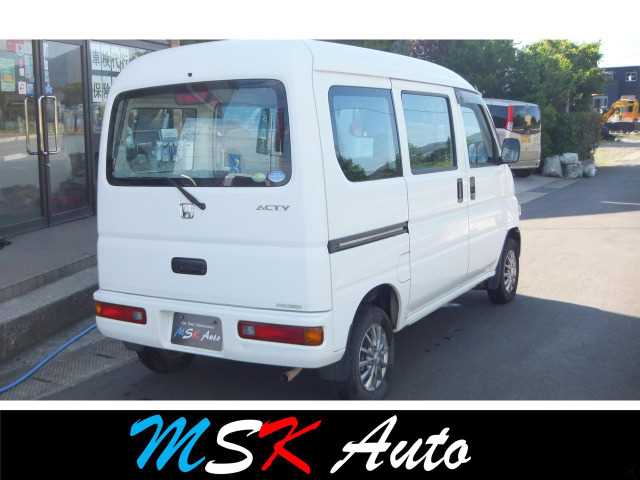
The HONDA ACTY is one of the simplest, most rugged kei trucks and vans you’ll find. Its compact 660cc drivetrain and spartan mechanicals respond extremely well to sensible maintenance and a few targeted, modest upgrades. The following compact guide focuses on practical tyre choices, fluids and service intervals, battery care, useful upgrades and everyday tips to keep a 2009 Acty dependable for years of farm work, deliveries or weekend fun.
Tyre choices and tyre care
The Acty rides on small-diameter wheels (12″ are common) and has a weight-focused design. Choosing the right tyre and keeping them in good condition will dramatically affect safety, load capacity and economy.
Size and load rating: Check the sticker on the door jamb or the owner’s manual for the factory tyre size and recommended pressures. Kei trucks commonly use 12″ tyres; many Acty owners use reinforced commercial-rated tyres (6PR/8PR) to handle payloads.
Type: For mixed use, an all-season or highway commercial tyre provides the best balance of tread life, comfort and economy. For rural work or muddy terrain, a light-truck/mud-and-snow pattern with stronger sidewalls helps. If you regularly carry heavy loads, choose a tyre with a higher ply rating or load index.
Maintenance: Check tyre pressure monthly and before any loaded run. Rotate tyres every 5,000–8,000 km to even wear. Replace tyres when tread depth approaches 3 mm for safety (legal minimums are lower in many places).
Fluids and service intervals
A simple maintenance schedule keeps the Acty’s tiny engine happy. The suggestions below suit an older, frequently used 2009 model — adjust for severe use or long idling.
Engine oil: Change every 5,000 km (≈3,000 miles) for conventional oil; you can extend to ~7,500 km with good-quality synthetic. Use the viscosity recommended in the manual for your climate (typically a 10W-30 or 5W-30 for many kei engines).
Oil filter: Replace with every oil change.
Transmission and differential: Check levels regularly. Service every 30,000–50,000 km or if shifting becomes gritty. Many Acty owners use a quality gear oil rated for small commercial vehicles.
Coolant: Inspect level and condition annually. Replace coolant every 2–4 years depending on the coolant type (follow recommendations in the manual). Use a coolant compatible with aluminium engines and the recommended mix.
Brake fluid: Replace every 2 years to avoid moisture-related brake fade and corrosion.
Air and fuel filters: Air filter every 15,000 km (more often in dusty conditions). Fuel filter intervals vary — inspect and replace per the manual or if you notice hesitation.
Timing chain vs belt: Many Acty engines use timing chains which don’t have a standard replacement interval but should be inspected for noise. If your particular engine uses a belt, follow the manufacturer interval (usually 60,000–100,000 km).
Battery care
Battery issues are one of the easiest problems to avoid. Here’s how to get long life from a 12V battery in a 2009 Acty.
Typical lifespan: Expect 3–5 years for conventional flooded batteries; 4–6 years for AGM under ideal conditions.
Maintenance: Keep terminals clean and tight. Inspect for corrosion quarterly; clean with a baking soda solution and protective spray. If the battery is serviceable, check electrolyte levels and top with distilled water as needed.
Charging: If the vehicle is used only for short runs, use a periodic trickle/maintenance charger to prevent sulfation. Have the charging system (alternator/regulator) tested if the battery repeatedly discharges.
Upgrade choices: Consider a higher-capacity or AGM battery only if you need better cold-start reliability or run extra electrical accessories. Make sure the battery fits securely and that polarity and terminal positions match.
Modest upgrades that make a real difference
Keep upgrades simple and functional — you want to preserve the Acty’s reliability and legal compliance while improving capability.
Tyres and wheels: Investing in higher-quality commercial-rated tyres is the single best upgrade for carrying capacity and durability.
Shock absorbers and springs: Replacing tired shocks with quality replacements (KYB, Tokico, Bilstein clones) and fitting heavier-duty springs or helper springs for regular loads improves handling and ride height under load.
Brakes: Better pads and stainless-steel braided lines improve stopping performance when loaded.
Electrical: Swap to brighter LED bulbs for lighting, and upgrade the battery if you need more reserve capacity.
Rust protection: An underbody treatment, seam sealing and attention to wheel arches extend life on salted roads.
Everyday tips to keep your Acty reliable
Inspect for oil leaks and unusual noises after long runs.
Carry a basic tool kit, spare tyre, tyre repair kit and a set of spare bulbs and fuses.
Don’t overload: even though kei trucks are tough, respect the payload limits — consistent overloading accelerates wear.
Warm the engine briefly in cold weather, but avoid long idling; modern fluids and tolerances like gentle driving after a short warm-up.
Keep records of services and receipts — easy to review and useful when selling.
Final thoughts
The 2009 HONDA Acty rewards straightforward care and thoughtful, modest upgrades. Prioritise tyre choice and condition, stick to a sensible fluids schedule, look after the battery and focus upgrades on durability and safety rather than power. With routine inspections, conservative loading and timely replacements, an Acty can be a dependable, low-cost workhorse for many years.
FAQs
Q: What tyre size should I fit?
A: Use the size on the door placard or manual. Common factory sizes are 12″ tyres; many owners choose commercial-rated tyres (6PR/8PR) for load capacity. If unsure, measure your wheel or consult a tyre shop.
Q: How often should I change the oil?
A: Every ~5,000 km (3,000 miles) for conventional oil in regular use. If you use synthetic oil and have mostly highway driving, you can extend intervals to ~7,500 km, but check regularly.
Q: Does the Acty have a timing belt I must replace?
A: Many Acty engines use a timing chain and have no scheduled replacement interval; however, if you hear unusual chain noise or suffer low oil pressure, inspect immediately. If your engine uses a belt, follow the replacement interval in the manual.
Q: How long will the battery last?
A: Typically 3–5 years for a standard flooded battery, longer for AGM in mild climates and with proper charging. Short trips and heavy accessory use shorten life.
Q: Are big performance upgrades worth it?
A: Not usually. The Acty’s value is simplicity and reliability. Focus on durability (tyres, shocks, brakes, rust protection) rather than power mods which can stress the drivetrain and reduce reliability.
The Honda Acty 2017 stands out as a compact vehicle tailored for urban environments, making it particularly relevant for city driving in Uganda. With its lightweight design and efficient 660cc...
As an experienced car inspector in Uganda, I understand the diverse needs of vehicle buyers across the country. When considering the Honda Acty 2010, potential buyers typically have varied priorities...
The Honda Acty Truck 2014 has garnered attention in Uganda for its compact design and versatility, making it a popular choice among small business operators and farmers. With its efficient...
This guide offers focused, practical advice to help you evaluate, finance, insure, budget for, and maintain a 2020 HONDA ACTY TRUCK. The Acty is a kei‑class mini pickup designed for...
Family owned dealership of new and pre-owned vehicles with several locations across the Uganda. Lowest prices and the best customer service guaranteed.
You're almost there, select at least one more to compare!
We use cookies to ensure that we give you the best experience on our website. If you continue to use this site we will assume that you are happy with it.
You can revoke your consent any time using the Revoke consent button.