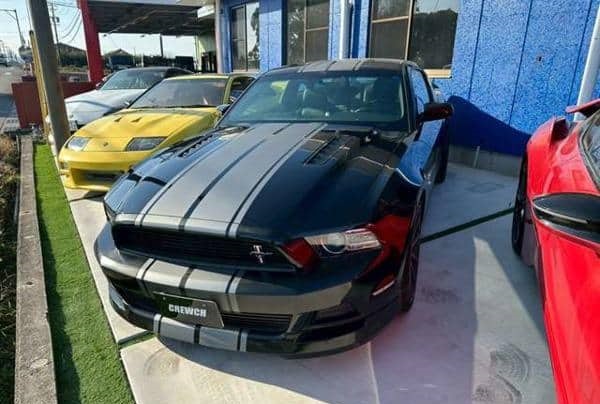
Use this focused, ready-to-use dealer checklist at intake or before posting/selling the car. It covers paperwork, physical inspection, test drive, mileage verification, and suggested customer questions to ask before listing a 2014 FORD MUSTANG.
1. Paperwork & Documentation
Confirm you have all legal and vehicle history documents. Missing paperwork delays title transfer and can affect the sale.
Vehicle title: Verify clear title, correct VIN, seller name matches current owner and ID.
Bill of sale: Obtain a signed bill of sale with sale price, date, odometer reading and seller contact info.
Registration: Current registration to confirm plate and owner details.
Service records: Maintenance receipts, timing belt/chain service, brake and tire history, oil changes.
Warranty and recall information: Check remaining manufacturer warranty, extended warranty documents, and any open recalls (use VIN lookup).
Loan/lien release: Confirm any liens are released if financed; obtain a payoff letter if needed.
Keys and remotes: Verify all keys, key fobs, valet/keyless entry remotes and any programming info.
Emissions/safety inspection certificates: If your state requires them, ensure up-to-date paperwork is available.
Seller disclosures: Written disclosures of accidents, flood or salvage history, and known mechanical issues.
2. Physical Inspection (Exterior & Interior)
Perform a thorough walk-around and interior inspection to spot cosmetic issues, structural concerns, and wear inconsistent with odometer.
VIN verification: Check VIN on dash, door jamb, engine bay and paperwork for consistency.
Exterior body: Look for dents, paint overspray, mismatched panels, rust spots, and signs of previous bodywork or repainting.
Frame and undercarriage: Inspect for evidence of repairs, bends, frame damage, or heavy rust—pay extra attention to lower rails and trunk floor.
Glass & lights: Check windshield for chips/cracks, headlamps, fog lamps, taillights and turn signals for function and condensation.
Tires & wheels: Measure tread depth on all tires, check for even wear patterns, curb rash, aftermarket rims or mismatched sizes.
Interior condition: Inspect seats (leather/vinyl), dashboard, carpets, headliner, seat belts, and cigarette or pet odors.
Convertible top (if applicable): Examine fabric/vinyl and mechanisms for leaks, rips, motor function and alignment.
Exhaust & emissions: Check tailpipe for excessive smoke, corrosion and aftermarket exhaust modifications.
Underhood inspection: Look for fluid leaks, cracked hoses, corroded battery terminals, condition of belts and visible repairs.
3. Mechanical & Systems Check
Basic mechanical checks can reveal issues that affect value or safety.
Fluids: Inspect engine oil color and level, transmission fluid (if accessible), coolant level, brake fluid and power steering fluid.
Battery & charging: Test battery voltage and alternator output; check for corrosion and secure mounting.
Brakes: Visually check pad thickness, rotor condition and brake lines for leaks.
Suspension & steering: Look for worn bushings, leaking shocks/struts, and play in steering components.
AC/heater: Verify HVAC function and compressor operation.
Electrical systems: Test windows, locks, mirrors, seat adjustments, horn, wipers, and infotainment/phone connectivity.
Engine bay labels: Confirm any emissions or service stickers (timing, belt records) are present and consistent.
4. Test Drive Checklist
Structured test drives reveal drivability concerns. Drive at low and highway speeds and simulate common driving conditions.
Pre-drive: Note any dashboard warning lights; ensure tire pressures are correct and mirrors adjusted.
Cold start: Listen for unusual noises on start, rough idle, smoke or warning lights.
Acceleration & power: Confirm smooth throttle response, turbo/supercharger (if equipped) operation, and no hesitation.
Transmission: For automatics, check smooth shifts, no slipping or hard engagement. For manuals, check clutch engagement, pedal travel and gear sync.
Braking: Test for soft pedal, pulling, vibrations, and ABS activation under hard braking.
Steering & alignment: Verify straight-line tracking, absence of wander and no clunks over bumps.
Noise & vibration: Listen for rattles, knocks, wheel bearings, drivetrain vibrations or CV joint noises.
Electronics while driving: Test cruise control, backup camera, sensors, and Bluetooth/infotainment features.
Parking & low-speed maneuvers: Confirm parking brake function, sensors, and ease of parking maneuvers.
5. Mileage Verification
Confirm accuracy of the odometer reading and look for signs of rollback or discrepancies.
Odometer reading: Record the mileage from the instrument cluster and in the bill of sale.
Service records & stickers: Match mileage stamps on service invoices and stickers to the current reading.
Digital records: Retrieve vehicle history report (Carfax/AutoCheck) and manufacturer service history using the VIN.
Wear vs miles: Compare interior/exterior wear (pedal wear, seat creasing, steering wheel wear, carpet condition) to the stated mileage.
Electronic modules: Check for inconsistent module mileage values (dealer scan tools can compare module mileage summaries if available).
Odometer tampering signs: Look for scratched screws on the instrument cluster, mismatched date stamps on records, or sudden mileage drops in reports.
6. Questions to Ask the Seller / Customer
Ask targeted questions to uncover relevant history and set buyer expectations.
Reason for selling: Understand owner motivation (upgrade, mechanical issues, relocation).
Accident history: Ask directly about collisions, airbags deployment, or body repairs.
Service history: Request records for major services (timing belt/chain, transmission service, brake replacement).
Modifications: Confirm any engine tuning, exhaust, suspension, nitrous, or non-factory performance parts and whether any warranty was voided.
Usage pattern: Daily driver, weekend car, track use or commuter—this affects condition and pricing.
Open recalls or lights: Has the owner addressed open recalls or unresolved warning lights?
Title status & liens: Confirm there are no outstanding liens and whether the title is clean or branded (salvage/rebuilt).
Extras: Ask about spare tire, jack, accessories, window stickers, and owner’s manual availability.
Final thoughts
Using this comprehensive intake checklist for a 2014 FORD Mustang will help you identify safety issues, accurately document vehicle condition, verify legal status and mileage, and prepare the car for a transparent listing. A consistent intake process reduces risk, builds buyer trust, and helps price the vehicle correctly. Always document findings with photos, dated notes and scanned paperwork. For any red flags—structural damage, odometer discrepancies, unresolved recalls, or major mechanical faults—investigate further with a certified mechanic or request additional documentation before posting the car for sale.
Frequently Asked Questions (FAQs)
Q: Should I run a vehicle history report before posting?
A: Yes. A vehicle history report (Carfax, AutoCheck) helps confirm title status, accident history, and reported mileage. It’s a crucial step before listing.
Q: How do I verify open recalls?
A: Use the VIN at the NHTSA recall lookup or the Ford Owner site to check open recalls. Request proof of recall repairs if the report shows open items.
Q: What if there are discrepancies in the odometer readings?
A: Do not list the vehicle until discrepancies are reconciled. Obtain service records, module scan reports and a signed statement from the seller explaining the discrepancy. Consult your legal/title department if you suspect tampering.
Q: Are aftermarket modifications a problem?
A: Modifications reduce some buyers’ interest and can affect insurance/warranty. Document all mods, assess quality of installation, and disclose them in the listing. Consider offering a stock parts swap if feasible.
Q: When should I get a pre-sale mechanical inspection?
A: If the intake or test drive reveals concerns—or if you lack comprehensive service records—get a pre-sale inspection from a trusted mechanic to identify costly repairs that could affect pricing.
Q: What paperwork must remain with the vehicle for the buyer?
A: Provide the signed title (or lien release if financed), bill of sale, any warranty documents, service records, owner’s manual, and state-required emissions or safety certificates at delivery.
Below is a compact, practical summary of ownership costs and expectations for a 2015 FORD MUSTANG. Because the Mustang comes in several engines/trims (2.3L EcoBoost I4, 3.7L V6, 5.0L V8...
The 2025 Ford Mustang GT, an emblem of American muscle car heritage, has garnered attention not just for its performance but also for its suitability in diverse driving environments. In...
The 2022 FORD MUSTANG is a compelling mix of modern tech and classic muscle-car feel. Whether you drive an EcoBoost, GT, or one of the performance variants, treating the car...
As an experienced car inspector based in Uganda, I understand the unique perspectives of buyers in our diverse market. For those seeking a vehicle for city commuting, the Ford Mustang’s...
Family owned dealership of new and pre-owned vehicles with several locations across the Uganda. Lowest prices and the best customer service guaranteed.
You're almost there, select at least one more to compare!
We use cookies to ensure that we give you the best experience on our website. If you continue to use this site we will assume that you are happy with it.
You can revoke your consent any time using the Revoke consent button.