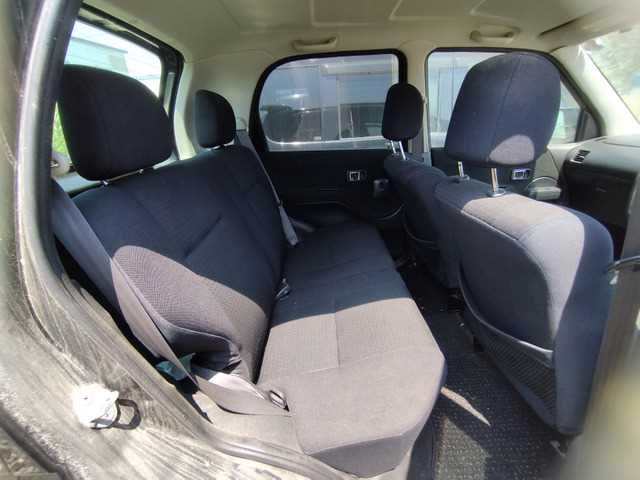
The 2011 DAIHATSU TERIOS KID is a compact, city-focused crossover that appeals to buyers looking for a small SUV-like package with easy maneuverability and economical running costs. When choosing the right spec for comfort, safety, handling and daily use, focus less on badges and more on the features and condition that affect everyday ownership. Below is a buyer-focused guide to help you pick the best Terios Kid for your needs.
Start with your priorities
Before comparing specs, decide which of the following matters most to you:
Handling: steering feel, suspension condition, tires and brakes.
Daily use: fuel economy, ease of parking, boot space, reliability and running costs.
Key specs and features to look for
Focus on the hardware and options that directly affect comfort, safety and handling rather than trim labels—especially since market-specific trim names vary. Here are the practical features that matter:
Engine & transmission
Choose the engine and gearing that match your driving. Small, low-displacement engines are economical for city use but will feel strained on high-speed highways or with a full load. If you do more highway driving, a slightly higher-output version (if available in your market) or a taller final drive is preferable.
Automatic transmissions are easier for urban stop-and-go, while manuals can feel peppier and save fuel if you’re comfortable shifting. Check for smooth shifting and no slipping or delayed engagement during a test drive.
Suspension & handling
Inspect the suspension for worn shocks or noisy struts—these degrade comfort and handling. A Terios Kid with newer dampers or replaced bushings will ride and track better.
Look for a spec with anti-roll benefits if offered (stiffer rear torsion beam or upgraded front stabilizer) to reduce body roll without killing ride comfort.
Brakes, tires & wheels
Good tires and correctly sized wheels are vital. Budget models may come with smaller wheels and taller sidewalls—good for comfort but less precise in corners. Choose the setup that balances grip and ride quality.
ABS is a major safety plus; check brake pad and rotor condition and test for any vibration under braking.
Interior comfort
Look for adjustable driver seating and good lumbar support—small SUVs can be surprisingly uncomfortable on long trips if seats are basic.
Climate control (automatic if available) and a functioning heater/AC system dramatically improve daily comfort.
Higher trims often include better upholstery, upgraded headrests and additional storage options. If you spend a lot of time inside the car, prioritize these features.
Safety features
At minimum, seek a model with multiple airbags and ABS. Electronic stability control (ESC) is a strong plus if present in your market’s spec.
Check for seatbelt pre-tensioners, iso-fix / LATCH child seat anchors, and good visibility from the driver’s seat (mirror placement, rear window and optional parking sensors or camera).
Condition and ownership considerations
For a vehicle that’s nearly a decade or more old by the time of purchase, condition and service history matter as much as equipment. Prioritize these areas:
Full service history and receipts—regular oil changes, timing belt/chain service (if applicable), and documented repairs.
Rust inspection—check wheel arches, sills and underbody in colder or coastal regions where salt is used.
Transmission and engine health—look for oil leaks, unusual noises, and steady idling. A compression or leak-down test is a good idea if you suspect issues.
Parts availability—confirm that consumables (filters, brakes, suspension components) are easy and affordable to source in your area.
Practical buying checklist
Test drive in traffic and on a rural road to assess low-speed comfort and mid-range power.
Inspect underbody, suspension joints, and tire wear patterns.
Verify airbags and ABS light behavior on startup; any persistent warnings should be resolved before purchase.
Confirm paperwork, including vehicle inspection certificates and import/registration documents if applicable.
Consider getting a pre-purchase inspection from an independent mechanic experienced with small DAIHATSU models.
If you want model and trim names specific to your market (for example, Japan, Europe, Africa or other regions), tell me your country and I’ll add those exact trim names and local variant differences to this guide.
Final thoughts
Choosing the right 2011 Daihatsu Terios Kid comes down to balancing comfort, safety, handling and daily practicality. Focus on the features that impact daily driving—seat comfort, suspension condition, tires, brakes, and essential safety equipment—then verify mechanical health and service history. For city drivers, prioritize economy, ease of parking and comfortable low-speed ride. For more mixed driving, look for higher-output or better-geared versions and upgraded suspension/braking components. With a careful inspection and the right spec, the Terios Kid can be an economical, nimble and practical small SUV for everyday use.
FAQs
Q: Is the Terios Kid reliable for daily commuting?
A: Yes—when it’s been well-maintained. These compact crossovers are designed for urban use and low running costs. Prioritize vehicles with a documented service history and recent maintenance.
Q: Which trim should I choose for the best safety?
A: Choose a trim that includes multiple airbags, ABS and (if available) electronic stability control. If trim names are unclear in your market, tell me your country and I’ll list which trims typically include these features.
Q: Are parts and servicing expensive?
A: Parts are generally affordable for Daihatsu models, but availability varies by region. Confirm local parts supply and labor costs before purchase, and consider a model with commonly used wheel/tire sizes to keep running costs down.
Q: Should I prefer automatic or manual?
A: For city driving, an automatic (or CVT if offered) is more convenient. Manuals can be more engaging and slightly more fuel-efficient if you drive skillfully. Choose based on your driving environment and comfort with manual shifting.
Q: What are the common mechanical issues to watch for?
A: Check for oil leaks, worn suspension components, steering play, and transmission slipping. Also inspect for rust in regions that use road salt. A pre-purchase inspection will catch most of these issues.
If you’d like country-specific trim names and exact spec differences for the 2011 Terios Kid, tell me your country and I’ll update the guide with that detail.
As an experienced car inspector in Uganda, I understand the apprehensions that buyers face when considering a vehicle like the Daihatsu Terios Kid, especially the 2011 model. In urban settings,...
Use this practical dealer/private-sale checklist when evaluating a 2011 DAIHATSU TERIOS KID or a similar small SUV / kei car. Print or copy the checklist and tick items off during...
Family owned dealership of new and pre-owned vehicles with several locations across the Uganda. Lowest prices and the best customer service guaranteed.
You're almost there, select at least one more to compare!
We use cookies to ensure that we give you the best experience on our website. If you continue to use this site we will assume that you are happy with it.
You can revoke your consent any time using the Revoke consent button.