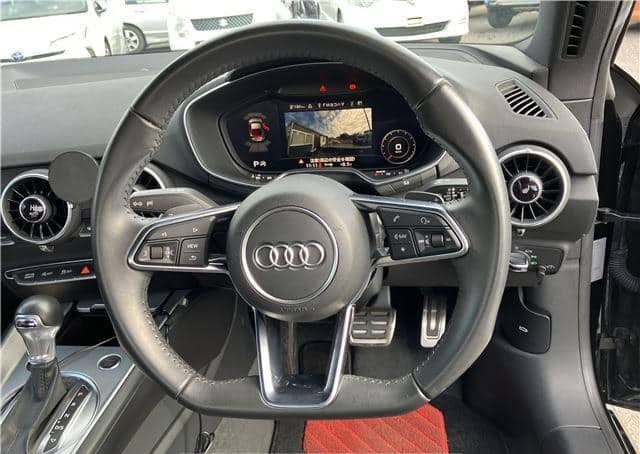
The 2020 AUDI TT is a stylish, compact sports car that blends sharp styling with punchy turbo power and high-quality interiors. Whether you’re looking at a base TT coupe/roadster, a sportier TTS, or a rare TT RS, a careful pre-purchase check will save money and headaches. This concise guide covers what to inspect before you pay, differences in trims and engines, likely trouble spots, and the paperwork and history questions you should ask.
Quick overview of trims and engines
- Base AUDI TT (2.0 TFSI) — The standard model uses a turbocharged 2.0-liter four-cylinder (around 220–235 hp depending on market and tune). It commonly pairs with a 7-speed S tronic dual-clutch transmission. Drivetrain configuration can vary by region and option; check whether the car is front-wheel drive or fitted with Audi’s quattro system.
- AUDI TTS — A performance step up from the base TT. It uses a more heavily tuned 2.0 TFSI with roughly 280–310 hp (commonly ~288 hp in many markets), sport-tuned suspension, upgraded brakes, and typically includes quattro all-wheel drive and unique styling/trim items.
- Audi TT RS — The high-performance halo (less common on the used market). It uses Audi’s 2.5-liter five-cylinder turbocharged engine producing roughly ~400 hp, heavier-duty brakes, and full quattro drivetrain. Expect a higher asking price and potentially more track use history.
What to check before you buy — exterior & body
- Body gaps and paint: look for mismatched paint textures or overspray that can signal repairs. Check panel fit and alignment for signs of previous accidents.
- Convertible-specific checks: if it’s the Roadster, operate the soft top several times (cold and warm). Inspect the fabric for tears, worn seals, or signs of leaks in the boot and trunk.
- Lights and lenses: check for condensation inside headlights/taillights and ensure LEDs or xenon units operate properly.
- Wheel and tire condition: inspect for curb rash, uneven tire wear (a sign of alignment or suspension trouble), and matching tire sizes/ages.
Interior & electronics
- Virtual cockpit and MMI: test all the screens, menus, and nav functions. Look for frozen screens or pixel issues.
- Switches and trims: check seat controls, heated seats, speaker grills, and the steering wheel for wear beyond the mileage.
- Sound system and connectivity: test Bluetooth, USB, and optional Bang & Olufsen systems. Confirm all speakers play without distortion up the volume scale.
Mechanical checks & test drive
- Cold start and idle: listen for rough idle, knocking, or long cranking. Black/blue smoke on start suggests oil burning or bad seals.
- Transmission shifting: the 7-speed S tronic should shift smoothly in automatic and manual modes. Look for hesitation, clunking, or slip during hard acceleration.
- Turbo behavior: listen for whine, unusual whistles, or flutter. Boost should come in smoothly without large lag or sudden power loss.
- Brakes and steering: check pedal feel, brake pull, and ABS activation. Listen for grinding or squeal under deceleration.
- Suspension: test over bumps for rattles, clunks, or excessive bounce. Check for play in wheel bearings and front/rear control arm bushings.
- Highway test: check stability at speed, wind noise, and whether the car tracks straight with hands-off briefly (always stay ready to correct).
Likely trouble spots for 2020 Audi TT
- Direct-injection carbon buildup — As with many modern direct-injection engines, carbon deposits on intake valves can occur over time and cause rough idle or reduced performance.
- S-tronic dual-clutch issues — Mechatronic units and clutch pack wear can show as shuddering, hesitation, or harsh shifts if not properly maintained.
- Oil leaks and consumption — Check for oil seepage around valve cover gaskets, turbo oil lines, and the oil pan. Excessive oil burning is occasionally reported on higher-mileage examples.
- Electrical gremlins — Infotainment bugs, faulty sensors, and occasional warning lights can appear. Make sure all modules function and check for stored fault codes.
- Convertible seals and leaks — Roadsters can develop leaks and worn latches, and soft-top mechanisms might need rebuilds.
- Track use / hard driving — TTS and TT RS models are more likely to have been driven hard or tracked; look for heat-cycled components and early wear on brakes, tires, and clutches.
What to ask for in the history and paperwork
- Full service records — Look for regular oil changes (Audi-recommended intervals), transmission fluid/DCT service records, and any major repairs. Gaps in maintenance are a red flag.
- Accident and repair history — Request detailed records of any accident repairs and inspect for proper repairs (structural damage is a deal-breaker).
- VIN check (Carfax/AutoCheck) — Verify title branding (salvage, rebuilt) and confirm odometer consistency.
- Recall and campaign compliance — Check the VIN on NHTSA or Audi dealer systems for open recalls and proof they’ve been completed.
- Proof of original window sticker or option list — Useful to confirm factory equipment and options like adaptive dampers, performance packages, or upgraded audio.
- Usage history — Ask whether the car was a daily driver, stored, or used on track, and whether any aftermarket tuning was performed (ECU tunes, turbo upgrades, etc.).
- Pre-purchase inspection (PPI) — Insist on a PPI by an independent Audi specialist. It’s worth the cost and often catches problems invisible during a casual test drive.
Negotiation tips
Use any maintenance gaps, required upcoming services (DCT service, brake pads, tires), evidence of repairs, or cosmetic imperfections as leverage in negotiations. For TTS/TT RS examples, higher-performance components are costlier to repair—factor that into your offer.

Final thoughts
The 2020 Audi TT is a rewarding compact sports car if you buy smart. Focus on a clean service history, confirm transmission and turbo health during the drive, check for leaks and electronic faults, and get a thorough PPI. Understand which trim you’re buying (base TT vs TTS vs TT RS) so you can anticipate performance, maintenance complexity, and likely wear. With the right inspection and paperwork in hand, you can enjoy the TT’s blend of style and agility without surprises.
FAQs
- Q: Is a pre-purchase inspection necessary?
- A: Yes. A PPI by an Audi specialist or experienced independent mechanic almost always saves money by uncovering hidden issues—especially with complex systems like the S-tronic and turbo.
- Q: How often does the S-tronic need service?
- A: Audi recommends periodic service intervals for dual-clutch transmissions — check the owner’s manual and the vehicle’s service records. Some components (mechatronic unit) can be expensive if neglected.
- Q: Are convertibles (Roadster) more problematic?
- A: Roadsters require extra scrutiny—soft-top seals, mechanisms, and the trunk area for leaks. Also check for interior sun/UV wear that indicates heavy exposure.
- Q: Should I avoid cars with aftermarket tuning?
- A: Not automatically, but aftermarket ECU tunes can stress engines, transmissions, and driveline parts. If the car is tuned, request specifics and recent maintenance; prefer cars returned to stock for a safer purchase.
- Q: Where can I check open recalls?
- A: Use the NHTSA website (nhtsa.gov/recalls) or ask an Audi dealer to check recalls by VIN.