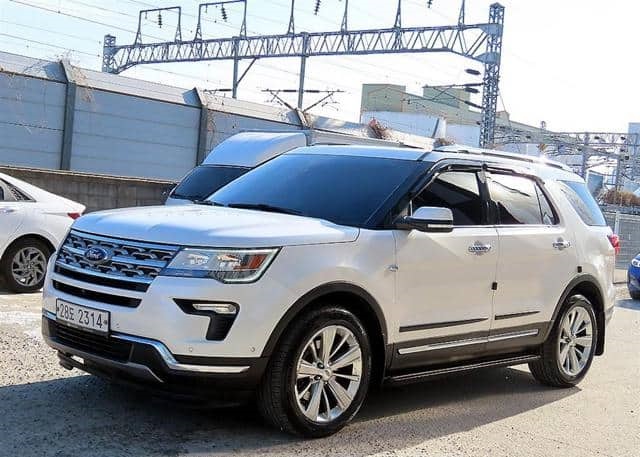
The 2019 FORD EXPLORER is a midsize, three-row SUV that balances family practicality with everyday comfort. Below is a concise, practical summary focused specifically on city and highway performance, ride quality, fuel economy, and day-to-day usability. This overview is aimed at buyers who want real-world impressions rather than deep technical detail.
City Performance
The Explorer’s city driving manners are generally composed. In traffic, the turbocharged 2.3L EcoBoost four-cylinder provides adequate low-end torque for smooth acceleration from stoplights and easy merging in most situations. The available V6 delivers noticeably stronger punch for drivers who prioritize brisk acceleration around town, though it costs more in fuel.
Visibility from the driver’s seat is good for an SUV of this size, but large A- and C-pillars can create some blind spots at intersections; many buyers appreciate optional blind-spot monitoring and rear cross-traffic alert for urban driving. The automatic transmission responds smoothly in normal conditions, though heavy throttle inputs can prompt more pronounced downshifts.
Highway Performance
On the highway the Explorer is confident. The EcoBoost four-cylinder is efficient and can comfortably cruise at interstate speeds; it also has enough torque for safe passing when downshifted. The V6 option gives a stronger and more effortless highway merge and passing ability, which is noticeable when carrying a full passenger load or towing light loads.
Wind and road noise are controlled well for the class, with higher trims offering improved insulation. Steering is tuned for comfort rather than outright sportiness, so while the Explorer tracks straight and feels stable, it won’t deliver the razor-sharp steering feedback of a sport SUV. Overall, it feels planted and composed at highway speeds.
Ride Quality
The Explorer emphasizes a comfortable, compliant ride. Its suspension soaks up city bumps and highway expansion joints without transmitting excessive harshness into the cabin. Ride quality is generally on the softer side, which makes longer drives less fatiguing for occupants. On twisty roads the body will show some roll, but the chassis controls it well enough for confident, relaxed driving.
Higher trims and optional adaptive suspension systems (where equipped) tighten up body control and reduce roll without sacrificing too much comfort. Road imperfections and sharper potholes can still be felt, particularly on large-wheel options, so tire and wheel choice will influence the perceived ride more than the platform alone.
Fuel Economy and Running Costs
Fuel economy depends heavily on engine, drivetrain, and driving style. The turbocharged 2.3L EcoBoost tends to deliver the best real-world economy for most drivers—typically in the low-to-mid 20s mpg combined in mixed driving—while the V6 usually falls to the high teens or low 20s combined under everyday conditions. All-wheel-drive variants and heavier loads will reduce efficiency further.
Maintenance and ownership costs are in line with mainstream midsize SUVs. Routine servicing intervals are conventional; however, fuel costs can add up with spirited driving or frequent towing. For buyers focused on running costs, choosing the smaller turbo engine and front-wheel-drive configuration generally offers the best compromise between performance and economy.
Everyday Practicality
Practicality is a strong suit. The Explorer seats up to seven (depending on configuration), and the second-row bench or captain’s chairs offer reasonable comfort. The third row is best suited to children or occasional adult use—space is tighter than in larger three-row SUVs, but it works well for most family needs.
Cargo space behind the third row is adequate for groceries or weekend bags, and folding the third row gives a significant increase in usable cargo area. Storage cubbies, cupholders, and charging ports are well-placed for daily convenience. The SYNC infotainment system is straightforward and responsive in most examples, though older base systems may lack the speed and polish of the latest tech.
Practical Considerations and Options
Trim and options matter: higher trims add comfort, quieter cabins, and advanced driver aids that meaningfully improve everyday usability.
All-wheel drive improves traction in poor weather but reduces fuel economy and adds weight.
Wheel size affects ride comfort—larger wheels tend to make the ride firmer and transmit more road harshness.
Towing capability varies by configuration; if you plan light towing or frequent hauling, opt for the stronger powertrain and towing package.
Who Should Consider a 2019 Explorer?
Choose a 2019 Explorer if you want a comfortable, family-friendly SUV with good day-to-day usability, a smooth ride, and flexible seating. It suits drivers who spend time in both city and highway environments and want a relaxed driving experience rather than a sporty, performance-oriented SUV. If you often carry a full load of adults in the third row or require maximum cargo space, consider evaluating larger three-row alternatives as well.
Final thoughts
The 2019 FORD Explorer is a balanced midsize SUV that performs well in the city and on the highway while delivering a comfortable ride and sensible practicality for everyday life. The turbocharged 2.3L engine provides the best compromise of performance and economy for most buyers, while the V6 is better suited to those who need extra power for heavier loads or towing. With good interior storage, flexible seating, and available driver-assist features, the Explorer remains a strong, pragmatic choice for families and commuters who prioritize comfort and utility.
FAQs
Is the 2019 Explorer good for daily commuting?
Yes. It offers a comfortable ride, manageable size for parking and city driving, and sufficient fuel economy for typical commuting—especially with the smaller turbocharged engine and front-wheel-drive setup.
Which engine is recommended for most drivers?
The 2.3L EcoBoost is a practical choice for most drivers due to its balance of power and fuel efficiency. The V6 delivers stronger performance but at the cost of higher fuel consumption.
How practical is the third row?
The third row is best for children and occasional adult use. It’s convenient for family trips but not as roomy as some larger SUVs’ third rows for full-time adult seating.
Does the Explorer have modern driver assistance features?
Yes—many 2019 models offer driver-assist features such as blind-spot monitoring, rear cross-traffic alert, and adaptive cruise control, particularly on higher trims or with option packages.
What should I check when buying a used 2019 Explorer?
Inspect the vehicle’s service history, check for any transmission or engine warning lights, evaluate tire and brake condition, and test drive both city and highway routes to assess ride comfort and noise. Verify that optional safety features and infotainment functions operate correctly.
Importing a used 2008 FORD EXPLORER XLT to Uganda can be a smart move: the model offers roomy seating, proven V6/V8 engines, and widely available spare parts. However, the process...
I can produce a practical, data-driven ownership-cost estimate for a 2023 FORD EXPLORER, but to be most accurate I need one quick clarification: Which trim/engine do you want me to...
As an experienced car inspector in Uganda, I’ve had numerous inquiries regarding the efficiency of various vehicles, particularly the 2011 Ford Explorer, especially for long-distance travel. For many city commuters,...
The 2008 Ford Explorer XLT is a midsize SUV that presents a unique blend of performance and utility, appealing to city dwellers in Uganda who require versatility in their daily...
Family owned dealership of new and pre-owned vehicles with several locations across the Uganda. Lowest prices and the best customer service guaranteed.
You're almost there, select at least one more to compare!
We use cookies to ensure that we give you the best experience on our website. If you continue to use this site we will assume that you are happy with it.
You can revoke your consent any time using the Revoke consent button.