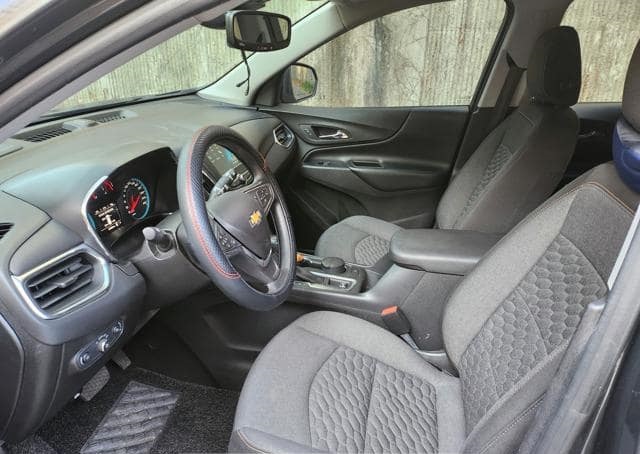
This guide gives you a compact, model-specific checklist and practical guidance for a 2018 CHEVROLET EQUINOX 2WD LS. Use it to compare offers, get insurance and financing quotes, and plan ownership costs. It focuses on insurance, financing, budgeting (ownership costs), pre‑purchase risk checks, and long‑term value so you can make informed decisions.
Quick model notes
The Equinox LS is the base trim of the 2018 compact crossover. The 2WD (front-wheel drive) configuration typically reduces fuel and insurance costs versus AWD. As a base model, the LS may lack some advanced driver aids found on higher trims—factor that into insurance and resale expectations.
Insurance: what to get and compare
Gather vehicle info: VIN, mileage, trim (LS), 2WD, engine option (note what the seller states), build date, and safety equipment (airbags, stability control, backup camera if equipped).
Compare at least three carriers: local agents, national online insurers, and a direct carrier. Provide identical details and VIN for precise quotes.
Coverage types to evaluate:
Liability limits (state minimum vs recommended higher limits).
Collision and Detailed (valuable on used cars with loan balance or high repair cost potential).
Uninsured/underinsured motorist and medical payments as needed.
Optional: GAP insurance if financing and the loan balance could exceed market value.
Discounts to request: multi-policy, safe-driver, anti-theft device, good student, low annual mileage.
Expectations: As a base compact SUV, premiums are moderate; fewer safety tech features could keep rates slightly higher than trims with advanced collision mitigation.
Financing: checklist and negotiation tips
Pre-qualify for financing from your bank/credit union before dealer negotiation. Use the pre-approval to compare dealer rates.
Check current used-car APRs and typical loan terms (36–72 months). Shorter terms increase monthly payments but reduce total interest.
Bring documentation: proof of income, ID, proof of insurance, and trade-in offer if applicable.
Ask about:
Total loan cost (APR × term) and monthly payment schedule.
Any origination or documentation fees.
Prepayment penalties (most personal auto loans do not have them, but check).
Consider paying a larger down payment to lower interest paid and avoid negative equity.
Budgeting / Ownership Costs (annual planning)
Plan out recurring and occasional expenses so ownership is predictable:
Fuel: Estimate based on your driving habits. A 2018 Equinox 2WD will generally fall in the mid-range for compact SUVs—budget accordingly based on local fuel prices.
Insurance: Use the quotes you obtained. Expect variation by driver profile and location.
Maintenance & repairs:
Routine: oil changes, filters, brake pads, tires, wiper blades, A/C service when needed.
Periodic: brake rotors, battery, suspension components, and wheel alignment—budget for an annual average (a conservative owner budget is $500–$1,200/year depending on mileage and local labor rates).
Registration and taxes: one-time and recurring—check your state’s rates.
Unexpected repairs: set aside an emergency fund (e.g., $500–$1,500/year averaged over time).
Depreciation: track market value. Depreciation is the largest long-term ownership cost—monitor comparable sale listings annually.
Pre‑purchase risk checks (detailed checklist)
Before buying, use this checklist when inspecting the vehicle or hiring a mechanic for a pre‑purchase inspection (PPI):
Documentation:
Confirm clean title and verify VIN on vehicle matches title and history report.
Order a vehicle history report (Carfax, AutoCheck) for accident, flood, and title-brand history.
Service history: Full-service records reduce risk. Look for regular oil changes and transmission/engine service.
Recalls: Check NHTSA recall history using VIN and ensure recalls were addressed.
Exterior & frame:
Inspect for paint mismatch, panel gaps, and signs of prior repair or structural damage.
Look undercarriage for corrosion or damage (important if the car was from a salt-belt or flood-prone area).
Interior & electronics:
Test HVAC, infotainment, all switches, seat adjustments, and lights.
Test drive:
Listen for transmission hesitation/shudder, unusual engine noises, turbo lag (if applicable), and CV joint clicking on turns.
Drive at highway and city speeds; test braking, steering alignment, and cruise control.
Mechanical scan: Have a mechanic scan for stored engine/transmission/airbag codes with an OBD-II scanner.
Tire and brake inspection: Check tread depth, even wear, and rotor condition.
Mileage vs age: Verify mileage is consistent with wear and maintenance history.
Long‑term value and resale planning
Factors that preserve value: thorough service history, no accidents, lower mileage, popular colors (neutral tones), and maintaining tires/appearance.
Trim and options: LS is base trim—lower initial price but also less desirable to buyers seeking higher tech/safety features. Consider this when buying and later listing for sale.
Market timing: compact SUVs depreciate faster initially; holding a reliable vehicle for several years tends to be more cost-effective than quick turnover.
Simple upgrades to resale value: keep original parts, keep records, fix small cosmetic issues, and perform basic maintenance before listing for sale.
How to use this checklist to compare offers
Collect exact seller details and VIN for each offer.
Run vehicle history reports and compare service histories side-by-side.
Get at least three insurance quotes using the specific VIN and driver profile.
Compare total cost of ownership for 3–5 years: purchase price + expected insurance + taxes + fuel + maintenance + expected depreciation.
Negotiate price or repairs based on inspection findings; use pre-approval financing offers to leverage better loan terms.
Practical tip
If you’re not comfortable conducting the inspection yourself, pay for a professional pre‑purchase inspection. The cost is small relative to the risk of missing a serious issue.
Final thoughts
Buying and owning a 2018 CHEVROLET Equinox 2WD LS can be a sensible choice if you approach the process methodically. Use the vehicle’s VIN and service records to get specific insurance and financing quotes, run comprehensive pre‑purchase inspections, and budget for fuel, maintenance, and unexpected repairs. Keep records and perform routine maintenance to preserve long‑term value. With careful comparison of offers and a realistic ownership budget, you’ll maximize reliability and minimize surprises.
FAQs
Q: How much should I budget annually for maintenance on a 2018 Equinox LS?
A: Budget conservatively: $500–$1,200/year for routine maintenance and minor repairs. Add an emergency reserve for larger items (brakes, tires, suspension) or unexpected failures.
Q: Does 2WD reduce my insurance cost compared with AWD?
A: Often yes—2WD vehicles generally have slightly lower premiums than AWD versions due to lower complexity and repair costs, but the difference varies by carrier and driver profile.
Q: Should I get GAP insurance for a used Equinox?
A: Consider GAP if you’re financing with a small down payment or a long term loan where the loan balance could exceed market value. If you buy outright or have significant equity, GAP is less necessary.
Q: What are the highest-risk items to watch for in a pre‑purchase inspection?
A: Prior structural damage, transmission issues (shuddering or delayed shifts), significant oil leaks, and evidence of flood or severe neglect. Verify these with a mechanic and vehicle history report.
Q: How long should I plan to keep the Equinox to get good value?
A: Keeping a reliable vehicle 5+ years typically spreads depreciation and maintenance costs more favorably than frequent turnover. Plan based on your mileage and financing term.
Use this checklist as your working document when evaluating listings and offers. If you want a printable checklist version or a sample comparison spreadsheet, I can generate one for you.
The Chevrolet Equinox 2WD LT 2020 stands out as a compact SUV that blends comfort with performance, making it a compelling choice for urban driving in Uganda. This model boasts...
This guide is a practical checklist for importing a 2022 CHEVROLET EQUINOX into Uganda. It covers the main rules and paperwork you must consider, sensible buying sources, the clearance and...
The 2018 Chevrolet Equinox 2WD LS emerges as a compelling option for urban drivers in Uganda seeking fuel efficiency without sacrificing comfort and style. With its turbocharged 1.5-liter engine, the...
As a seasoned car inspector based in Uganda, I understand the diverse needs of vehicle buyers in our unique environment. For those commuting in the bustling city, the efficiency of...
Family owned dealership of new and pre-owned vehicles with several locations across the Uganda. Lowest prices and the best customer service guaranteed.
You're almost there, select at least one more to compare!
We use cookies to ensure that we give you the best experience on our website. If you continue to use this site we will assume that you are happy with it.
You can revoke your consent any time using the Revoke consent button.