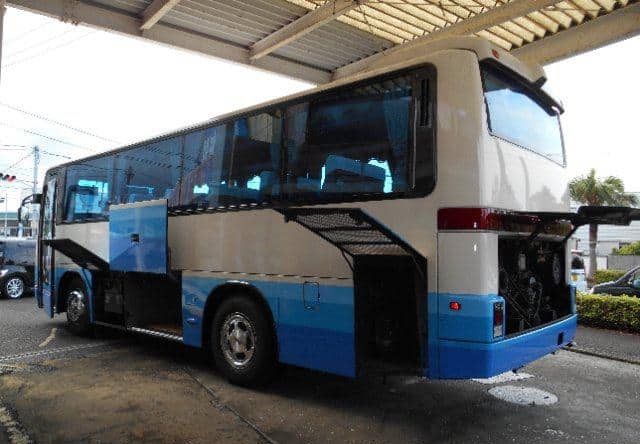
Note: engine/transmission codes, seating and equipment for the S’elega 31DX of the mid‑1990s vary by market and submodel. Below I flag typical ranges and common behaviors for vehicles of that era rather than insisting on one exact spec.
Overview
The HINO S’elega of the early‑to‑mid 1990s is a purpose‑built coach intended for intercity and charter work. The 31DX tag generally points to a medium‑length coach variant and a roughly 30‑odd seat layout in many markets, but configurations can range significantly (see FAQs). In practice this generation of S’elega is best understood as a torque‑oriented, heavy‑duty diesel coach: designed to cruise comfortably on highways and to carry passengers for long distances rather than frequent stop‑start urban shuttle work.
City vs Highway Performance
City (urban, stop‑start)
Acceleration and drivability: In city use the S’elega feels effortful. The heavy curb weight and long gearing mean initial acceleration is slow compared with transit buses tuned for urban routes. Torque is present but you’ll be constantly working through gears, especially on routes with repeated stops, steep ramps or tight turns.
Transmission behavior: Many examples are fitted with multi‑speed manual gearboxes or early automatics (4–6 speed range depending on market). Manuals give the driver more control but increase fatigue in traffic. Automatics ease city driving but some early boxes can be slow to respond and may sap a bit of fuel economy.
Maneuverability and accessibility: Turning radius and size are limitations for inner‑city work. Low‑entry versions are less common on 31DX models — boarding heights and luggage bays are generally optimized for intercity travel rather than frequent curbside stops.
Wear & maintenance: Stop‑start usage accelerates wear on the clutch, brakes and cooling systems. Older examples often show brittle suspension bushings and noisy drivetrains if not well maintained.
Highway (intercity, long distance)
Strengths: This is where the S’elega comes alive. The diesel engine (common 6‑cylinder units of that era, exact displacement and code vary by market) produces steady mid‑range torque suited to cruising at highway speeds, overtaking and holding speed on grades without constant downshifts.
Comfort and stability: With appropriate air suspension settings and appropriate tyre pressure, the coach feels stable and planted. At steady RPM and highway loads the engine is quieter and more fuel‑efficient than in city work.
Driver ergonomics: Long‑haul ergonomics are usually better than on pure urban buses — driving position, visibility and instruments are laid out for long journeys.
Long‑term durability: When used predominantly on highways and maintained properly the mechanicals show good longevity. Heat cycling and heavy idle time are reduced compared with urban duty, which prolongs engine, transmission and brake life.
Ride Quality
Ride quality is one of the S’elega’s selling points when set up correctly. Most mid‑90s S’elegas used a combination of leaf springs and/or air suspension depending on the trim; higher‑spec or later variants have full air suspension giving noticeably smoother rides.
Highway: Generally compliant and comfortable for passengers. Air suspension smooths speed bumps and undulations, and reduces driver fatigue on long runs.
City: On poorly maintained city streets the suspension can feel firm and unforgiving, particularly if bushings/shocks are worn. Road noise and body vibration are more apparent in older units that lack modern NVH treatments.
Maintenance impact: Ride degrades noticeably if air bags, valves, or shock absorbers are tired or if axle alignment and tyre condition are neglected.
Economy (fuel & operating costs)
Expect economy to be highly dependent on duty cycle, load, driving style and engine/transmission choice. Rather than one precise fuel number, realistic ranges for a mid‑1990s medium coach like the 31DX are:
Highway cruising (steady speed, light‑to‑moderate load): best economy — lower consumption and consistent mpg. Engines operate in an efficient RPM band, so long runs with steady speeds are most economical.
Typical real‑world range: depending on engine and load, expect consumption commonly cited in the coach sector — roughly 25–40 L/100 km (approximately 2.5–4.0 km/L). These figures can swing a lot with driver technique, gradients, passenger load and air‑conditioning use.
Fuel economy numbers above are indicative ranges for coaches of this size and age; confirm with your specific vehicle, engine and typical route for planning.
Everyday Practicality
Seating/layout: The 31DX label typically implies a medium‑capacity layout. Many examples have around 28–35 passenger seats, luggage bays and optional toilet/galley installs in some markets. Exact seating and interior fitment vary by operator and country.
Maintenance & parts: Hino has a broad global parts network, but local availability depends on region and model popularity. Older models require more frequent attention to cooling, turbo systems (if fitted), brakes and suspension.
Driver experience: Good forward visibility and an ergonomically sensible cockpit for long runs. In urban duty driver fatigue increases due to clutch work and gearbox use if manual.
Economics of ownership: Lower initial cost on the used market (compared with newer coaches) but watch for corrosion, engine rebuild history, and the cost of major scheduled services.
Adaptability: Well suited to intercity charters, school routes with moderate distances, and tourist work. Less ideal as a high‑frequency city shuttle unless extensively modified and driven conservatively.
Final thoughts
The Hino S’elega 31DX (1994) is a workmanlike mid‑length coach that delivers its best performance on highways and longer distances. It offers a comfortable ride when suspension is in good condition and is durable when maintained, but it is not optimized for heavy stop‑start urban duty. Fuel consumption and drivability depend strongly on engine/transmission fitment and how the vehicle is used. For operators focused on intercity services, tour work or medium‑distance school runs, the 31DX can be a practical, cost‑effective choice — provided you account for older‑vehicle maintenance and ensure parts availability in your market.
FAQs
Q: How many passengers does the 31DX typically seat?
A: The 31DX designation commonly implies a medium‑capacity layout — often around 28–35 seats — but configurations vary by market and operator. Some examples are modified to carry fewer passengers with more luggage space, or fitted with toilets/galley.
Q: What engines and transmissions were used?
A: There was no single engine/transmission across all markets. Typical mid‑90s S’elegas use 6‑cylinder diesel engines and either manual multi‑speed gearboxes or early automatics. Exact codes and displacements depend on region and submodel; always verify the VIN/service plate on a specific vehicle.
Q: Is it suitable for inner‑city routes?
A: It can be used in city work but it’s not ideal. The coach is heavier, has a larger turning radius and its gearing is optimized for cruising rather than frequent stops. If you plan regular urban operation, expect higher maintenance and fuel costs.
Q: What are common maintenance issues?
A: Watch for wear in suspension bushings/air springs, clutch and gearbox wear (in city use), turbocharger and cooling system issues on older engines, and corrosion in body and frame areas. A thorough pre‑purchase inspection is essential.
Q: How much fuel does it use?
A: Real‑world consumption depends on load and duty cycle. A reasonable expectation for coaches of this class/age is in the range of 25–40 L/100 km (2.5–4.0 km/L), with highway figures at the lower end and urban/mixed at the higher end.
If you have a specific vehicle (VIN, engine code, or photos), I can give a more tailored assessment of performance, known issues and realistic fuel figures for that unit.
If you’re considering importing a 2006 LAND ROVER Discovery 3 (automatic diesel) into Uganda, it’s essential to follow the necessary steps to ensure a smooth process. This article outlines the...
Introduction The LAND ROVER Discovery 5, launched in 2017, is known for its impressive off-road capabilities, luxurious interiors, and high-tech features. However, when considering purchasing a used...
In regions like Uganda, where heavy rains might cause flooding, being cautious when purchasing a used vehicle is essential. A 2008 LAND ROVER Range Rover Vogue 4.4 V8 is a...
The 2009 LAND ROVER Range Rover Vogue represents a blend of luxury and capability, making it an attractive choice for many who operate in Uganda’s diverse terrains. Known for its...
Family owned dealership of new and pre-owned vehicles with several locations across the Uganda. Lowest prices and the best customer service guaranteed.
You're almost there, select at least one more to compare!
We use cookies to ensure that we give you the best experience on our website. If you continue to use this site we will assume that you are happy with it.
You can revoke your consent any time using the Revoke consent button.